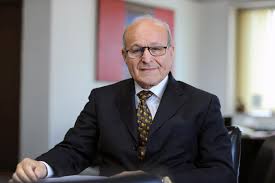

The bankruptcy of French home appliance maker Brandt has delivered a major blow to Cevital Group, the privately held conglomerate owned by Algeria’s richest man, Issad Rebrab, exposing the growing strain on his overseas investments amid persistent political, economic, and governance challenges. Brandt’s liquidation, confirmed on December 11 by the Nanterre commercial court, brings an abrupt end to one of the most ambitious African-led acquisitions in European manufacturing and leaves around 700 workers unemployed.
Cevital acquired Brandt in April 2014 in what was widely celebrated at the time as a landmark deal. The purchase was seen as proof that an Algerian industrial group could revive and sustain a legacy European brand, while also extending Cevital’s reach beyond North Africa into advanced manufacturing markets. Brandt’s factories in France were meant to anchor Cevital’s appliance ambitions in Europe, while also supplying its industrial hub in Sétif, Algeria, with both expertise and output.
That optimism never fully translated into a turnaround. Brandt struggled for years under intense competition in France’s household appliance market, which was already facing margin pressure, weak demand growth, and rising costs. Annual revenues stagnated at around €260 million, and repeated efforts to expand sales or restore market share failed to gain traction. Despite producing roughly 50,000 cooking appliances annually in France, the business could not regain the scale or profitability needed to justify its continued operation.
The situation worsened over the past two years as sales declined steadily, prompting the court to place Brandt under judicial administration in October. Several rescue options were explored, including a state-supported proposal to convert the company into a cooperative, but none attracted sufficient backing or capital. With no viable buyer emerging, the court ordered full liquidation, effectively ending Brandt’s decade-long struggle under Cevital’s ownership.
The closure has triggered strong reactions in France, particularly in the Centre-Val de Loire region, where local officials described the decision as an industrial shock. Government ministers in Paris expressed regret over the loss of skilled manufacturing jobs in Orléans and Vendôme, highlighting the broader erosion of France’s domestic appliance industry.
For Rebrab and Cevital, Brandt’s collapse compounds an already difficult period. The group has faced mounting governance and legal pressures following Issad Rebrab’s conviction in 2019 and the more recent conviction of his son, Omar Rebrab, in 2025. These issues, combined with strained Algeria–France economic relations and rising uncertainty around foreign investments, have weakened Cevital’s ability to defend and restructure its international assets.
The financial impact is also reflected in Rebrab’s personal fortune. According to Forbes, his net worth has fallen sharply in recent years, dropping from about $5.1 billion in 2022 to roughly $3 billion, as losses mount and investor confidence in the group’s global strategy erodes.
Brandt’s failure marks more than the end of a single subsidiary. It underscores the limits of cross-border industrial expansion from emerging markets into mature European sectors, especially when operational challenges are compounded by political risk, legal trouble, and fragile bilateral relations. For Issad Rebrab, once celebrated as a symbol of African industrial ambition abroad, the collapse of Brandt stands as a stark reminder of how quickly those ambitions can unravel.