
Nigeria has approved a ₦54.43 trillion Medium-Term Expenditure Framework for 2026–2028, outlining revenue, spending priorities, and fiscal assumptions. But can this plan deliver growth, stability, and economic diversification?
A More Realistic Approach: But Is It Enough?
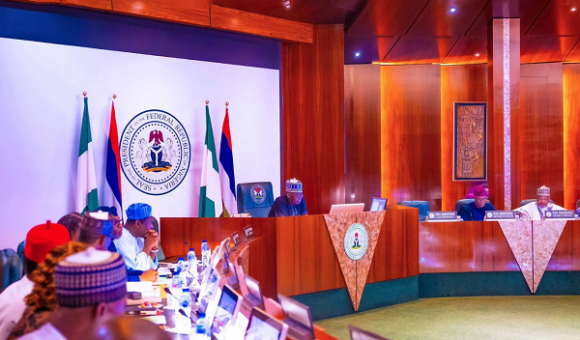
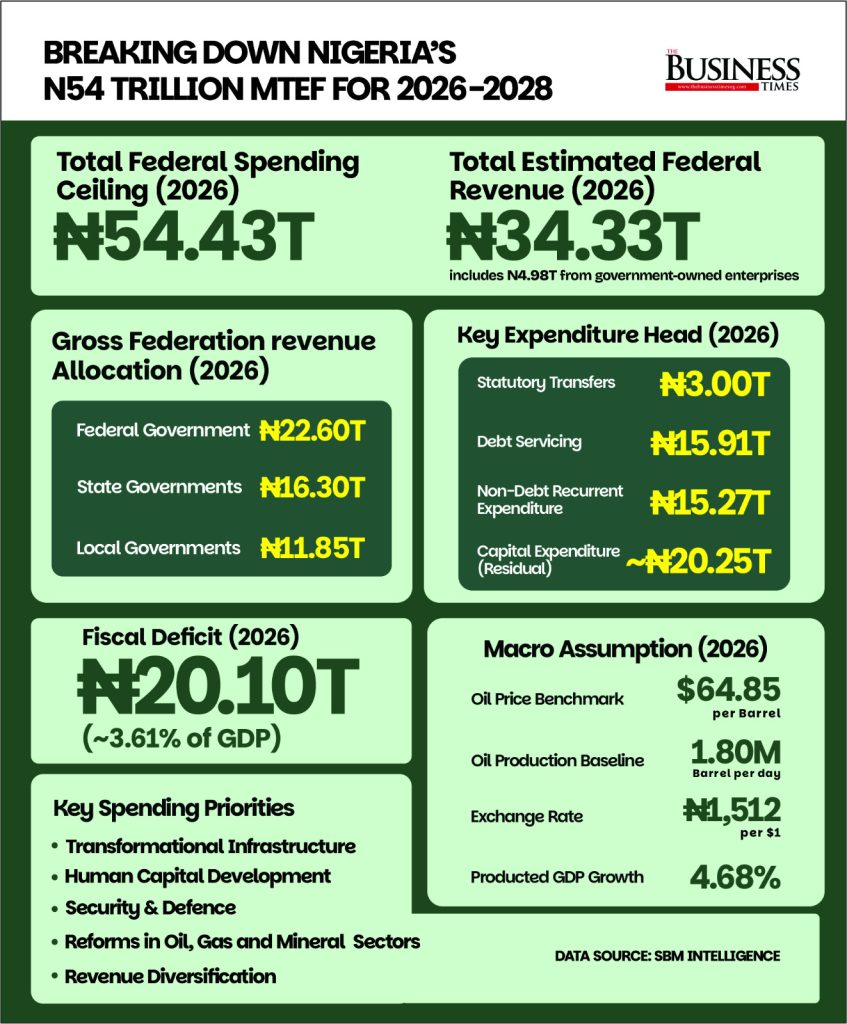
On 3 December 2025, Nigeria’s Federal Executive Council approved the 2026–2028 Medium-Term Expenditure Framework, projecting federal government expenditure of ₦54.43 trillion for 2026. With total revenue at ₦34.33 trillion, the country faces a deficit of ₦20.10 trillion, more than twice its projected revenue.
Dr Muda Yusuf, Chief Executive Officer of the Centre for the Promotion of Private Enterprise (CPPE), describes this as a positive shift toward realism. The 2026 revenue projection marks a 16 percent reduction from the ₦36.35 trillion projected for 2025, moving away from the overly optimistic projections that have plagued Nigerian budgets for years. The framework benchmarks oil at $64.85 per barrel, projects production of 1.8 million barrels per day, assumes an exchange rate of ₦1,512 to the dollar, and targets 4.68 percent GDP growth.
However, the fiscal reality is sobering. Of the ₦34.33 trillion revenue, ₦15.91 trillion goes to debt service, ₦15.27 trillion to personnel costs and pensions, and around ₦3 trillion to statutory transfers. This leaves roughly ₦20 trillion for infrastructure, security, social programs, and all other government functions, for a country of over 200 million people. With 46 percent of revenue consumed by debt service alone, Nigeria has little room for the transformational investments its economy desperately needs.
Conservative Oil Assumptions in Volatile Times
Nigeria’s decision to benchmark crude oil at $64.85 per barrel, down from $75 in 2025, reflects lessons learned from past fiscal crises. Minister of Budget and Economic Planning Senator Abubakar Atiku Bagudu explained that this price is deliberately below Nigeria’s typical Bonny Light selling price of $65-67 per barrel. International forecasts suggest even lower prices: the U.S. Energy Information Administration projects $55 per barrel, Goldman Sachs $56, and the World Bank $60.
The production target presents bigger concerns. While the framework sets an aspirational goal of 2.06 million barrels per day, it uses 1.8 million barrels per day for budget calculations. Yet Nigeria averaged just 1.64 million barrels per day in Q3 2025, according to the National Bureau of Statistics, and Business Monitor International (BMI) forecasts only 1.73 million barrels per day for 2026. The CPPE recommends an even more conservative 1.6 million barrels per day benchmark to ensure fiscal resilience. With oil providing 60 percent of government revenue, any shortfall directly threatens the government’s ability to function.
Where Will the Money Go?
President Tinubu has emphasised minimum transformational investment in infrastructure, enhanced security spending for training institutions, and vigilance against revenue leakages in oil, gas, and solid minerals. The Renewed Hope Ward Development Programme targets all 8,809 wards nationwide, while the government mandates that 70 percent of the 2025 budget roll over into 2026 to focus on completing existing projects rather than starting new ones.
The challenge is fiscal space. With nearly 60 percent of the budget allocated to debt service and salaries before any development spending occurs, Nigeria finds itself in a fiscal trap, borrowing more to service existing debt while struggling to invest in growth. While the priorities are sound, execution has historically been Nigeria’s Achilles heel, particularly given the MTEF’s late submission to the National Assembly, four months past the legal deadline set by the Fiscal Responsibility Act.
Hidden Risks to Growth
The MTEF projects 4.68 percent GDP growth for 2026, with nominal GDP reaching over ₦690 trillion. The IMF forecasts slightly lower at 3.9 percent for 2025 and 4.2 percent for 2026. But the World Bank’s October 2025 Nigeria Development Update notes that the economy would need to grow about five times faster to achieve the government’s $1 trillion economy goal by 2030. President Tinubu himself has acknowledged current growth remains insufficient to lift millions from poverty.
Several critical risks threaten the plan’s success. The debt sustainability crisis looms largest, if revenue falls short as it often does, the burden becomes unsustainable. Revenue optimism persists despite conservative assumptions, as the ₦34.33 trillion projection assumes significant improvements in tax collection that Nigeria has struggled to achieve for decades. Implementation capacity remains weak, with capital expenditure routinely falling far short of allocations. The rushed MTEF submission compromises legislative scrutiny, potentially leading to poor implementation. Oil production uncertainty adds another layer of risk, as achieving even the conservative 1.8 million barrels per day target faces challenges from theft, ageing infrastructure, and underinvestment.
What This Means for Everyday Nigerians and Businesses
For Nigeria’s small and medium enterprises, contributing approximately 48 percent of GDP and employing a significant workforce, the MTEF represents both hope and concern. The approved $100 million African Development Bank facility for the Nigeria Youth Investment Fund is encouraging but modest relative to the sector’s size and needs.
Access to finance remains the biggest challenge. With the Central Bank’s Monetary Policy Rate at 27 percent and stringent lending terms, most small businesses struggle to secure credit. Banks prefer lending to the government through treasury bills rather than to businesses lacking collateral. The MTEF’s focus on debt service means less fiscal space for intervention funds that could bridge this financing gap.
Infrastructure deficits hit hardest. Nigerian businesses generate their own power, fix their own roads, and provide security, adding an estimated 30-40 percent to operating costs. The fiscal plan talks about infrastructure investment, but with 60 percent of the budget consumed by debt service and salaries, questions persist about funding actual development. Multiple taxation and regulatory hurdles compound these challenges, with new tax reform bills potentially alleviating or worsening the business environment depending on implementation.
For ordinary citizens, inflation continues eroding purchasing power, with many spending 60-70 percent of income on food alone. While fuel subsidy removal in 2023 created fiscal space, it triggered immediate inflation spikes and increased transport costs. The World Bank notes that despite macroeconomic improvements, these gains have yet to significantly improve living standards. The real test is whether government agencies can release funds on time, execute projects efficiently, and curb corruption that diverts resources.
Can Nigeria Diversify Away from Oil?
Nigeria’s oil dependence, providing 60 percent of government revenue and 90 percent of export earnings while contributing less than 10 percent to GDP, represents its greatest vulnerability. As the global energy transition accelerates, Nigeria’s window for leveraging oil wealth to build a diversified economy is closing.
Zainab Usman, author of “Economic Diversification in Nigeria: The Politics of Building a Post-Oil Economy,” argues that Nigeria’s challenge is not the oil curse but achieving diversification beyond oil, subsistence agriculture, and informal activities. The MTEF shows positive signs with emphasis on strengthening tax administration and boosting non-oil revenue, but significant obstacles remain.
Agriculture employs about 30 percent of the workforce and offers diversification potential, yet rural insecurity, poor infrastructure, and limited credit constrain growth. The digital economy has shown robust growth following the 2022 Nigeria Startup Act, but requires sustained investment in power and broadband infrastructure. Mining offers promise given global demand for lithium and rare earth elements, with the government targeting $500 million in investments by 2026, yet only three percent of minerals are processed locally.
Manufacturing remains the critical challenge. Nigeria imports virtually everything from consumer goods to industrial inputs, and the MTEF’s tight fiscal space provides limited resources for the massive investments diversification requires. Carnegie Endowment research notes that most oil-dependent countries have failed to diversify, with no examples of complete success. The challenge is particularly acute at the state level, where oil-producing states like Bayelsa and Akwa Ibom draw approximately 85 percent of revenue from oil. Only Lagos and Ogun consistently generate more than half their revenue internally.
Perhaps the deepest obstacle is political. As Usman argues, control of oil revenue drives political competition, creating perverse incentives where resource distribution takes precedence over building productive capacity. True diversification requires sustained focus on pro-productivity policies and comprehensive reforms, whether this MTEF represents that beginning remains uncertain.
A Fiscal Plan at the Crossroads
Nigeria’s ₦54.43 trillion MTEF represents both progress and peril. The shift toward conservative assumptions marks welcome realism, while the focus on infrastructure, security, and ward-level development addresses genuine needs. Yet with nearly half of revenue consumed by debt service and limited fiscal space for transformational investments, the plan’s ability to deliver inclusive growth remains uncertain.
For ordinary Nigerians and business owners, the question is not whether the fiscal plan looks good on paper; it is whether it translates into jobs, infrastructure, and improved living standards. That depends on execution, political will, and Nigeria’s ability to break free from decades of fiscal mismanagement. The next three years will reveal whether this ₦54 trillion gamble pays off or whether Nigeria remains trapped in the cycle of dependency, debt, and disappointed expectations. The stakes could not be higher for a young, rapidly growing population that deserves better.