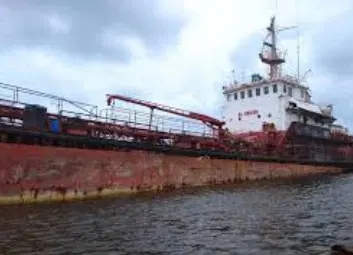

The United States has seized a Nigerian-linked supertanker in a major maritime operation as part of efforts to clamp down on crude oil theft and other suspected international crimes. The vessel, named Skipper, was intercepted by the United States Coast Guard along with support from the U.S. Navy, the government announced on Wednesday in a move that highlights growing global enforcement against illicit oil smuggling networks.
According to U.S. authorities, the Skipper is a Very Large Crude Carrier (VLCC) about 20 years old, with the International Maritime Organization (IMO) number 9304667. The tanker is reportedly owned and managed by Thomarose Global Ventures Ltd., a company based in Nigeria, though its official registration lists Triton Navigation Corp. in the Marshall Islands as the registered owner.
The U.S. government said the seizure was carried out under American law enforcement powers and stemmed from allegations that the tanker was involved in crude oil theft, piracy, and a range of transnational crimes. President Donald Trump formally announced the operation on Tuesday, emphasizing the coordinated effort between the Coast Guard and the Navy.
Investigators also stated that the tanker was flying under the flag of Guyana, but Guyana’s Maritime Administration Department confirmed that the Skipper was not registered on its national ship registry and had been using the flag without permission. The use of a false flag is a violation of international maritime regulations and often associated with attempts to evade monitoring and enforcement.
U.S. security officials have further said the tanker is under investigation for reportedly transporting not only stolen crude oil but also large consignments of hard drugs, and that it may have been connected to financial networks linked to Iranian interests and Islamist-backed money laundering financiers.
The exact route and final destination of the seized cargo were not publicly detailed by U.S. officials, but independent maritime tracking data suggests that the Skipper loaded Venezuelan crude prior to its interception in Caribbean waters. The vessel has previously been sanctioned by U.S. authorities under its former name, Adisa, for involvement in oil trafficking networks that allegedly helped export Iranian crude in violation of U.S. sanctions.
The seizure is part of a broader U.S. strategy to enforce sanctions and disrupt global illicit oil flows that fund criminal or terrorist activities. Washington has in recent years focused significant resources on combating illegal oil sales tied to sanctioned states and organisations, including tracking movements of large tankers and enforcing sanctions through naval and legal measures.
The announcement has attracted attention from maritime security experts who say the operation underscores increasing cooperation between military and law enforcement agencies to tackle sophisticated oil theft and smuggling operations that span multiple countries and regions. Analysts also note that tying shipping companies and vessels to illicit networks often involves complex ownership structures and flag-of-convenience tactics that make enforcement difficult.
There has been no immediate response from Nigerian authorities or the companies linked to the vessel. The implications of the seizure for international shipping, sanctions enforcement, and regional diplomatic relations are still unfolding, and observers expect further statements from U.S. and foreign governments in the coming days.