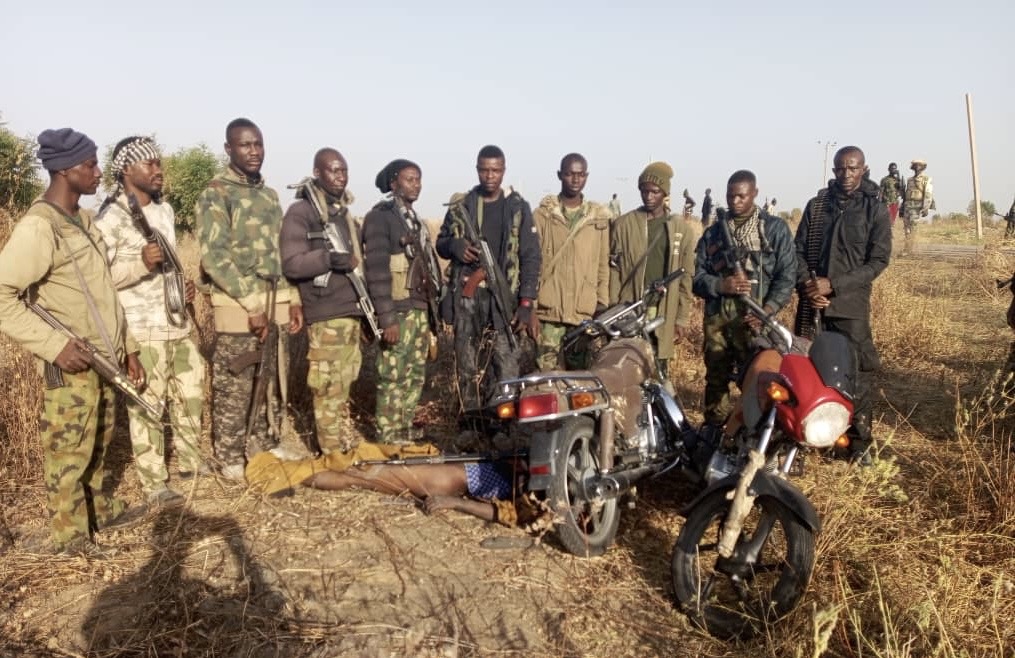

Nigeria began the week on Monday amid mounting concern over the growing insecurity in its northern regions, following two violent incidents that have left communities shaken and raised questions about the effectiveness of ongoing counter-insurgency operations. In Borno State, the Islamic State West Africa Province (ISWAP) claimed responsibility for the execution of a senior army officer after ambushing a military convoy near Wajiroko. Four soldiers were confirmed dead in the attack. The Nigerian Army initially dismissed reports that the officer had been abducted, labelling such claims as false. However, ISWAP’s statement, released via its Amaq propaganda channel, contradicted this assertion, claiming the officer was interrogated and executed. The development marks an alarming escalation in the 16-year insurgency, which has repeatedly destabilised the northeast despite ongoing military offensives.
Borno State has remained the epicentre of Nigeria’s fight against Boko Haram and its splinter group, ISWAP. While the military has in recent months mounted offensive operations to regain control of towns and villages, insurgents have repeatedly overrun bases and retreated only after reinforcements arrived. Monday’s ambush underscores the continued vulnerability of front-line troops and highlights the operational challenges facing Nigeria’s military in areas where insurgents maintain intimate knowledge of the terrain. Security analysts warn that such attacks could further undermine public confidence in the government’s ability to safeguard its citizens and maintain stability.
The security threat was compounded on the same day in Kebbi State, in the country’s northwest, where armed assailants attacked Government Girls Comprehensive Secondary School in Maga at approximately 4 a.m. The gunmen engaged local police in a firefight before scaling the perimeter fence and abducting 25 female students. The vice principal, Hassan Yakubu Makuku, was shot dead while attempting to resist the attackers, and another staff member sustained injuries. Security forces, including additional tactical units, soldiers and local vigilantes, have been deployed to track the assailants and rescue the students. This attack represents yet another tragic chapter in the history of school kidnappings in northwest Nigeria, which have been driven by a combination of armed gangs, kidnappers-for-ransom networks, and extremist groups. The mass abduction in Kebbi evokes the memory of the 2014 Chibok schoolgirls kidnapping in Borno State, which captured international attention and highlighted the persistent threats to children and education in the region.
Beyond the immediate human cost, these twin incidents carry significant economic implications. In Borno and surrounding states, the continued insurgency disrupts agricultural production, trade and local businesses. Farmers often abandon their fields in fear of raids, while markets and transport networks suffer from insecurity, leading to increased food prices and reduced economic activity. In the education sector, repeated kidnappings can erode confidence in public schools, forcing parents to seek costly private alternatives or keep children at home, with long-term effects on human capital development. Security concerns also deter investment, both domestic and foreign, in northern Nigeria, limiting the potential for regional development and exacerbating economic inequality between the north and the more stable southern regions.
The international community is likely to monitor these incidents closely, as they affect not only regional stability but also global interests in counter-terrorism and security cooperation. Nigeria’s persistent insecurity may influence foreign investment decisions and affect multinational businesses that rely on stable conditions for operations, particularly in sectors such as agriculture, logistics, and energy. Insurgency-related disruptions in northern Nigeria can also have spillover effects on neighbouring countries, including Niger, Chad, and Cameroon, where cross-border movements of militants and displaced populations strain resources and security arrangements.
The government has faced criticism for what some observers describe as an inconsistent approach to security and counter-insurgency operations. Military offensives have succeeded in recapturing towns but have not eliminated the insurgents’ ability to strike high-profile targets, suggesting a need for more coordinated intelligence, improved troop welfare, and enhanced community engagement. Analysts stress that tackling these threats requires a multi-pronged strategy that combines security enforcement with socio-economic development, as poverty, unemployment, and marginalisation in the north often create conditions conducive to recruitment by armed groups.
In Kebbi State, the attack on the girls’ school also emphasises the urgent need for reinforced security in educational institutions, alongside preventive measures such as community vigilance, improved infrastructure and rapid response units. The recurring nature of school abductions risks undermining broader efforts to improve education outcomes in northern Nigeria, where literacy and school attendance already lag behind national averages.
As Nigeria reels from Monday’s violence, the immediate priorities are clear. Security forces must locate and safely recover the abducted students in Kebbi, while military command in Borno must review strategies to prevent further ambushes on convoys and outposts. At the same time, policymakers and development agencies must confront the wider economic and social consequences of persistent insecurity. Without effective and sustained action, northern Nigeria’s cycles of violence could continue to hinder national development, disrupt livelihoods, and pose long-term risks to both local and regional stability.
Monday’s twin incidents serve as a stark reminder of the human, social and economic costs of insecurity in Nigeria. They illustrate the urgent need for comprehensive strategies that combine military effectiveness, community protection, and socio-economic development to break the cycle of violence and restore confidence in the state’s ability to safeguard its citizens and institutions.