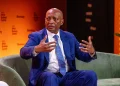

Dr Reuben Abati, former presidential aide and Arise Television anchor, has criticised the Federal Government’s ₦70,000 monthly transport allowance for public sector workers, describing the policy as discriminatory because it excludes private sector employees facing the same rising transport costs.
Abati made the remarks today, Wednesday, October 28, during a discussion on Arise Television, questioning why the government’s intervention was limited to public servants when the cost of fuel and transportation affects Nigerians across different sectors.
“Private sector, who is going to give us 70,000 naira transportation costs? We all go to the same market. No, we are all buying fuel at a very high cost,” Abati said.
He argued that workers outside the public service also need relief as rising fuel prices continue to increase the cost of commuting and other household expenses.
According to a report published by Tribune Online today, Abati also faulted the government’s directive to the Nigerian National Petroleum Company Limited (NNPCL), saying Nigerians had yet to see tangible results from the measure.
He said the lack of visible results meant the wider population continued to bear the burden of high fuel and transportation costs.
The Federal Government approved the six-month transport intervention following a conciliation meeting with the Nigeria Labour Congress (NLC) in Abuja yesterday, October 27, 2026.
Under the agreement, federal public service workers across all levels are to receive ₦70,000 monthly from November 2026, while state and local governments have been urged to adopt similar measures for their respective employees.
The memorandum of understanding also provides for the payment of outstanding peculiar allowance arrears in three equal monthly instalments beginning in November.
However, the government and the NLC did not agree on the effective date for implementing the national minimum wage. Both parties agreed to establish a Minimum Wage Negotiation Committee and begin discussions immediately, according to reports by Channels Television and The Punch on October 27 and 28.
The agreement also covers outstanding allowances for health workers and other welfare issues.
Abati’s criticism raises questions about how the government intends to address the effects of rising transport costs on private sector employees, self-employed Nigerians and informal workers who are not covered by the public service arrangement.
The six-month intervention is intended to provide temporary relief to eligible public servants. However, the government has not announced a corresponding nationwide transport payment for private sector employees or informal workers.
The timing of the announcement has also attracted criticism from some Nigerians, with social media users questioning whether the measure is adequate and raising concerns about the implementation of previous worker-support commitments.
Claims that the allowance is politically motivated remain allegations rather than an established explanation for the policy.
The NLC agreement also leaves several issues unresolved, including the commencement date for a new minimum wage and the implementation of other welfare measures.
For workers across the country, the broader question remains how to ease the cost of transportation and other essential expenses when the pressure extends beyond government employment.