
Nigeria has unveiled a new electricity reform roadmap that prioritises three economic corridors, strengthens transmission infrastructure and tackles ₦3.3 trillion in accumulated sector liabilities as the Federal Government seeks to improve power supply to homes, businesses and industries.
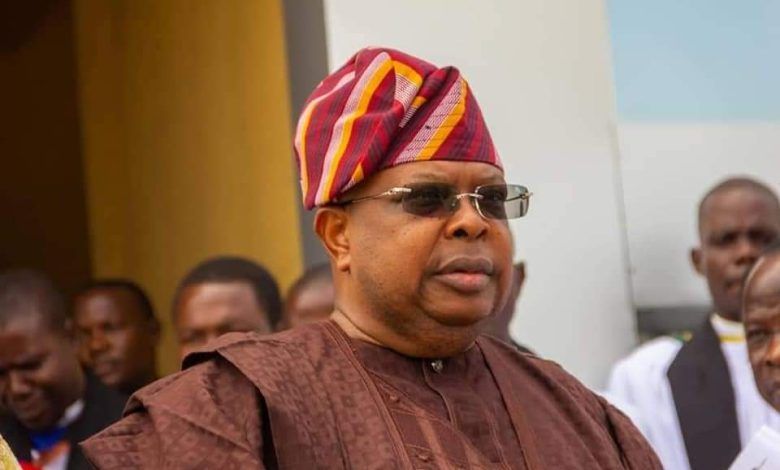
Minister of Power Joseph Tegbe announced the strategy at the Nigeria Energy Leadership Summit and Exhibition in Lagos on Tuesday, October 27, 2026, saying the government must move from designing reforms to delivering measurable improvements in electricity supply and sector performance.
In a report published on October 27, BusinessDay said the government would concentrate investment in areas with high electricity demand and strong revenue potential rather than spread resources thinly across the country.
The roadmap centres on four priorities: strengthening energy zones, improving the financial sustainability of the electricity market, optimising existing assets and expanding infrastructure to meet future demand.
Tegbe identified three priority corridors: Lagos-Ogun, Benin-Enugu-Port Harcourt, and Abuja-Kaduna-Kano. According to the minister, the Lagos-Ogun corridor accounts for about 50% of Nigeria’s electricity demand, making it a key target for infrastructure investment.
The corridor-based approach is intended to align electricity generation, transmission and distribution with demand from industrial and commercial centres.
The government is also conducting a technical audit of power infrastructure to determine where investment is most urgently needed. Tegbe said the exercise would help prevent public funds from being spent on projects that do not address the sector’s most pressing constraints.
Nigeria’s electricity supply remains constrained by inadequate gas supply to power plants, ageing infrastructure, transmission bottlenecks and losses across distribution networks.
In its October 27 report, BusinessDay quoted Tegbe as saying vandalism was also affecting transmission infrastructure, with major installations regularly damaged.
The government plans to address these weaknesses through targeted investments in priority corridors and a broader transmission expansion programme.
The proposed transmission super grid is intended to increase the network’s capacity to move electricity across the country. The government has also discussed new eastern and western grid arrangements to reduce the impact of disruptions, although the delivery schedule and technical details of these projects will depend on implementation.
Nigeria’s electricity challenge extends beyond generation. Even when power is available at generating plants, limitations in transmission and distribution can prevent it from reaching consumers reliably.
The government is also seeking international investment and technical partnerships to accelerate power projects and strengthen local manufacturing.
During a Nigeria-China power sector mission in September, Tegbe engaged Chinese engineering firms, including Sinomach, China Machinery Engineering Corporation (CMEC) and China National Electric Engineering Corporation (CNEEC), over electricity infrastructure and project delivery.
In a report published on September 11, The Guardian Nigeria said the discussions focused on accelerating Presidential Power Initiative projects, expanding transmission infrastructure and attracting investment across the electricity value chain.
The engagements also involved HengFei Cable, where the Nigerian delegation witnessed factory acceptance tests for high-voltage cables and related transmission materials intended for Nigerian projects.
The ministry has also pursued cooperation with Huawei Technologies on grid digitalisation, reducing electricity losses and assessing gaps in supervisory control and data acquisition systems used to monitor and manage power networks.
These engagements are intended to improve project delivery, expand transmission capacity and strengthen the technical capacity of Nigeria’s electricity industry. However, discussions and proposed partnerships should not be confused with completed investments or commissioned infrastructure.
The government has also highlighted the Renewable Asset Management Company (RAMCO), which is expected to manage publicly financed renewable-energy assets and mobilise about ₦3 trillion over the coming years. The figure represents a target for investment mobilisation, not funds already raised.
Tegbe said the government was working to reduce electricity distribution losses through metering, improved revenue collection and programmes supporting distribution companies.
The Presidential Metering Initiative targets the deployment of five million smart meters by 2027, according to the Federal Ministry of Power’s July 22, 2026, announcement on the Power Force Programme.
The programme includes training 5,000 young Nigerians as certified metering technicians to support meter installation and maintenance. The ministry said the wider initiative was designed to reduce aggregate technical, commercial and collection losses, improve billing transparency and strengthen revenue collection.
In its October 27 report, BusinessDay put distribution losses at between 30 and 40 per cent, while the government’s metering initiative aims to bring losses closer to international benchmarks.
The financial position of the electricity market is another priority. Tegbe said the government had paid ₦1.23 trillion out of an estimated ₦3.3 trillion in legacy sector liabilities.
The outstanding obligations continue to weigh on the industry, affecting liquidity and the ability of operators across the electricity value chain to meet their financial commitments.
The government says it is working to prevent new liabilities from accumulating by blocking financial leakages and improving payment arrangements.
The roadmap is organised into three phases. The stabilisation phase runs from June 2026 to February 2027, followed by an expansion phase from March 2027 through 2028. Broader sector transformation is expected from 2028 onwards.
The government’s immediate challenge is to turn these commitments into measurable improvements in electricity delivery.
For manufacturers and other businesses, more reliable electricity could reduce dependence on diesel generators, lower operating costs and improve productivity. Households would also benefit if improvements in generation, transmission and distribution translate into more consistent supply.
The effectiveness of the roadmap will ultimately depend on project execution, sustainable financing and the government’s ability to resolve the structural problems that have continued to undermine Nigeria’s electricity sector.