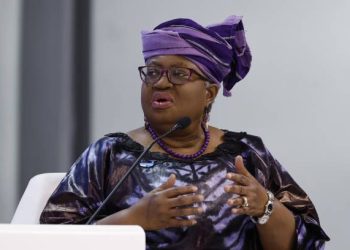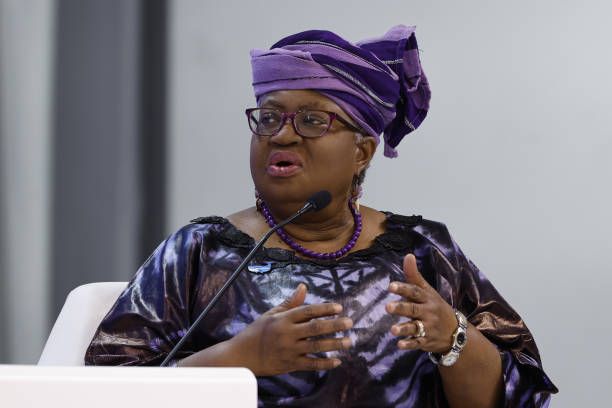

Ngozi Okonjo Iweala, director general of the World Trade Organisation (WTO), has urged countries to rethink globalisation and spread production across different locations to make international supply chains more reliable.
Speaking in an interview with Bloomberg’s Francine Lacqua, Okonjo Iweala said countries should reduce their dependence on a single nation or location for essential goods and services. She explained that the WTO is promoting a concept known as “re-globalisation”, which aims to strengthen global trade by distributing production across more countries and regions.
“We have come up with a concept at the WTO that we call re-globalisation. We believe that we need to reimagine globalisation and reimagine value and supply chains in a way that builds greater resilience for the world instead of being dependent on one geography or one place,” she said.
According to her, countries should identify areas where they have a competitive advantage and develop their capacity to produce goods that can serve both domestic and international markets. She noted that building supply chains takes years, making it important for governments and businesses to begin diversifying their production networks now rather than waiting for further disruptions.
“The world is changing but should it change around the basic principles of what makes people human?” she asked.
Okonjo Iweala also highlighted the growing importance of digital trade, which allows services such as education, healthcare, music and films to reach consumers through digital platforms. She said global trade is worth approximately $33 trillion, with digitally delivered services accounting for about $4 trillion. According to her, this segment is expanding by roughly 6% annually, making it one of the fastest growing areas of international trade.
The WTO chief also raised concerns about increasing pressure on multilateral institutions, which enable countries to cooperate on issues that cannot be effectively addressed by individual governments. She explained that these institutions were established after the Second World War because countries recognised the need for shared rules and international cooperation. However, the global trading system is facing growing disruption as some WTO members question whether existing trade rules adequately address changes in the world economy.
“Global trade is under tremendous stress and that is because many members of the WTO are beginning to feel that the rules no longer work for them the same way that they used to work in the past,” she said.
She added that dissatisfaction with the current system has encouraged some countries to take unilateral trade decisions rather than rely on multilateral agreements.
“The dissatisfaction is leading to unilateral behavior on the part of some,” she said.
Okonjo Iweala called for reforms to bring WTO rules in line with developments since the organisation was established, including the growing role of China and other developing economies in international trade. She warned against treating the dispute as a problem involving only the United States and China, noting that emerging markets and poorer countries also have concerns about the existing system.
“Making it a US and China problem is not recognising that many emerging markets and poorer developing countries also have problems with the system,” she said.
She stressed that WTO members must address these concerns promptly to ensure global trade remains inclusive, adaptable and capable of supporting economic growth across countries at different stages of development.