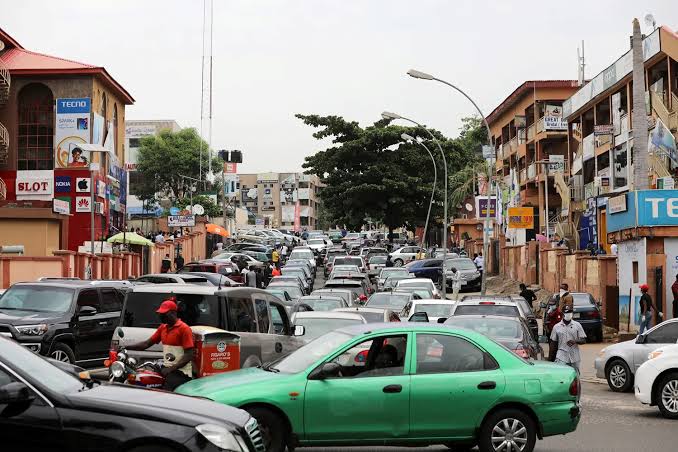

Residents of the Federal Capital Territory are facing higher transportation and household costs as petrol sells for between ₦1,450 and ₦1,500 per litre at many filling stations in Abuja, up from about ₦1,200 to ₦1,280 before the latest increases.
The News Agency of Nigeria (NAN) reported on Monday, September 21, 2026, that residents in Dei-Dei, Kubwa and Dutse complained that rising petrol prices were pushing up transport fares and adding to the cost of daily living.
A commercial driver in Dei-Dei, Sunny Peter, told NAN on Monday that fares had increased because of the higher cost of petrol.
According to Peter, the fare from Dei-Dei to Berger, which previously ranged between ₦900 and ₦1,000, now costs about ₦1,200 to ₦1,500, depending on traffic and demand.
He also said passengers travelling from Kubwa to Wuse now pay between ₦1,000 and ₦1,200, compared with ₦700 to ₦800 previously.
“We understand the challenges passengers face, but we also have to survive. Fuel is expensive, and maintaining our vehicles is becoming more difficult,” Peter said.
The latest increase followed a decision by Dangote Petroleum Refinery to raise its petrol gantry price from ₦1,265 to ₦1,350 per litre, effective Saturday, September 12, 2026, according to a price circular reported by PUNCH on September 12, 2026.
NAN’s checks in Abuja on Sunday, September 20, 2026, also showed that commercial tricycle operators had raised fares on several routes.
According to the NAN report published by PUNCH on September 20, the fare from Gudu to Lokogoma Junction increased from ₦200 to ₦300, while Dutse Express to Tipper Garage Junction rose from ₦400 to ₦500. In Lugbe, the fare from Chika Bridge increased from ₦100 to ₦200.
A tricycle operator in Dutse, Haruna Abdullahi, told NAN that he bought petrol at ₦1,430 per litre. Another operator, Ibrahim Dauda, said he bought petrol at the same price at an AY Shafa filling station.
The rising fares are also affecting workers and families.
A civil servant in Kubwa, Adaeze Okoli, told NAN on Monday, September 21, that a larger part of her salary now goes into transportation, leaving less money for food, rent and other needs.
“The cost of living keeps rising while our income remains the same. Every fuel increase affects everything we buy,” she said.
In Dutse, Esther Okeke, a mother of six, said the increase had affected food, school expenses, transportation and electricity costs.
“Managing the family budget has become more difficult,” she told NAN on Monday, while calling for measures to reduce the impact of rising fuel prices on commuters and transport operators.
The Federal Government commissioned the first batch of 37 buses under its 100 Renewed Hope Mass Transit electric-bus programme on August 26, 2026, with the buses intended to provide cheaper and more reliable transport for federal civil servants.
More recently, President Bola Tinubu directed state governments on Saturday, September 19, 2026, to accelerate the National Affordable CNG Transit Programme ahead of October 1, 2026, with the aim of delivering measurable reductions in transportation costs.