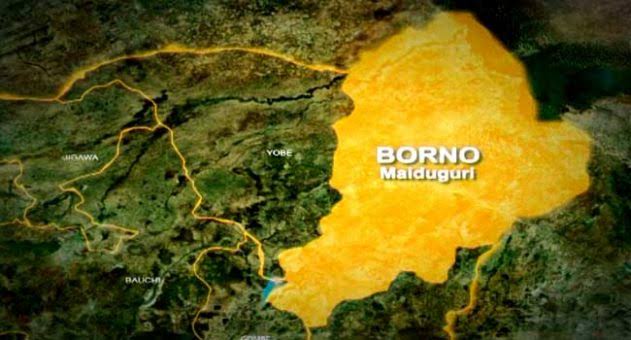

Borno State recorded Nigeria’s lowest food inflation rate in August 2026, with food prices falling on both a yearly and monthly basis, even as separate humanitarian assessments continued to show severe food insecurity across the state.
According to the National Bureau of Statistics (NBS) Consumer Price Index report released on Tuesday, September 15, 2026, Borno recorded food inflation of -4.04 percent year-on-year in August, the lowest rate among the states. National food inflation stood at 19.57 percent during the same period.
On a month-on-month basis, Borno’s food inflation was -12.15 percent in August, meaning the NBS recorded a decline in the average prices of food items measured in the state during the month. Only Taraba, at -12.42 percent, recorded a larger monthly decline.
Yet the price data sit alongside a very different picture of food access and hunger in Borno.
A Food Security Situation Analysis conducted by Nigeria’s Food Security Sector, with the Federal Ministry of Agriculture and Food Security, the Food and Agriculture Organisation (FAO) and the World Food Programme (WFP), projected that 2.9 million people in Borno would face food insecurity between June and August 2026, according to a report by The Guardian.
The humanitarian outlook also showed that the most severe forms of food insecurity were concentrated in Borno. In a report released on June 17, 2026, FAO and WFP said 15,000 people in Borno were projected to face Catastrophe-level food insecurity, classified as Phase 5, during June-August 2026. The agencies also placed northeast Nigeria among the global hunger hotspots of highest concern.
The apparent contradiction does not necessarily mean the two datasets are measuring the same thing. Inflation measures changes in prices, while food-security assessments consider whether people have reliable access to sufficient food. A fall in prices therefore does not automatically mean that households have enough income, access to markets or physical access to food.
Borno’s prolonged insecurity, displacement and restrictions on access to farmland and markets have been identified by humanitarian agencies as important drivers of food insecurity in the region. FAO said in January 2026 that insecurity in the Lake Chad Basin was restricting access to farmland and markets, while the June Hunger Hotspots report identified conflict and violence as major drivers of acute food insecurity in northeast Nigeria.
There is also a statistical caveat. The NBS itself cautioned in its August 2026 CPI report that state-level inflation figures should not be directly compared without considering differences in consumption patterns and the weights assigned to food and non-food items across states.
The International Monetary Fund has previously raised a separate concern about Nigeria’s CPI methodology. In its 2022 Article IV assessment, the IMF said the CPI weights and basket were based on expenditure data from the 2003/04 National Consumer Expenditure Survey and described the weights as “severely outdated” and not representative of current expenditure patterns. The IMF repeated the concern in its 2024 Article IV report while noting that work to update the CPI was ongoing.
That does not invalidate the August 2026 Borno figure. But it means the striking gap between falling measured food prices and severe food insecurity should be read as a question about what each dataset captures, rather than as evidence that one of the figures is necessarily wrong.