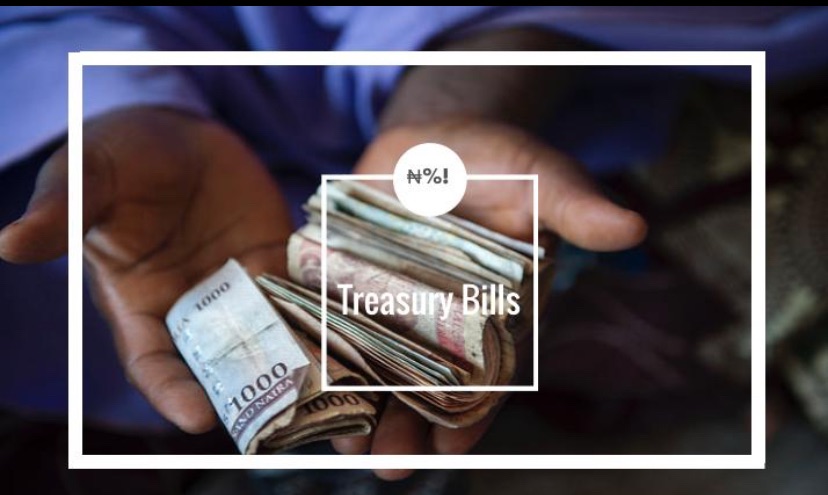

Nigeria’s fixed income market maintained strong performance on Wednesday, June 18, 2026, as investor activity remained high across government securities. Total market turnover reached ₦1.85 trillion, with Treasury Bills leading trading volumes across all instruments.
According to data from the Fixed Income Dashboard of the Central Bank of Nigeria, a total of 641 transactions were recorded during the trading session. These trades had a combined value of about ₦1.848 trillion and were spread across Treasury Bills, Open Market Operations (OMO) Bills, and Federal Government of Nigeria (FGN) Bonds.
Treasury Bills dominated market activity, accounting for the largest share of trades. The segment recorded 436 deals worth approximately ₦1.057 trillion. It also attracted 25 market participants, making it the most actively traded and widely participated instrument of the day. This shows continued strong investor preference for short-term government securities, which are seen as relatively safe and liquid.
Open Market Operations Bills followed in activity, recording 111 trades valued at ₦594.86 billion. These transactions involved 17 participants. OMO bills are typically used by the Central Bank to manage liquidity in the financial system, and they remain attractive to institutional investors seeking short-term returns.
Federal Government of Nigeria bonds recorded lower activity compared to other instruments but still maintained steady investor interest. The bond segment posted 94 deals worth ₦196.94 billion, involving 10 participants. This reflects continued demand for longer-term investments despite relatively lower liquidity compared to Treasury Bills.
Within the Treasury Bills segment, the one-year paper maturing on June 17, 2027, was the most actively traded instrument. It recorded 303 trades with a total value of ₦787.22 billion. The security closed at a yield of 20.75 per cent, reflecting strong demand for short-term returns.
Other notable Treasury Bills included the February 18, 2027 maturity, which saw 29 trades valued at ₦132.04 billion and closed at a yield of 17.89 per cent. The September 17, 2026 bill also saw moderate activity with 19 trades worth ₦25.85 billion, closing at a yield of 16.68 per cent.
In the OMO segment, the July 14, 2026 maturity led trading with 50 deals worth ₦370 billion, closing at a yield of 21.37 per cent. The September 8, 2026 OMO bill followed with 14 trades valued at ₦125.65 billion and a yield of 20.78 per cent.
In the bond market, the February 21, 2031 FGN bond was the most actively traded, recording 23 transactions worth ₦76.01 billion and closing at a yield of 17.60 per cent. The April 17, 2029 bond also attracted attention with eight trades valued at ₦36 billion and a yield of 17.21 per cent.
Overall, market data showed that shorter-dated government securities continued to offer higher yields compared to longer-term instruments. Long-dated bonds, such as the 2053 maturity, closed at lower yields around 15.22 per cent, while short-term instruments ranged between 16 per cent and 22 per cent, reflecting investor preference for liquidity and near-term returns.