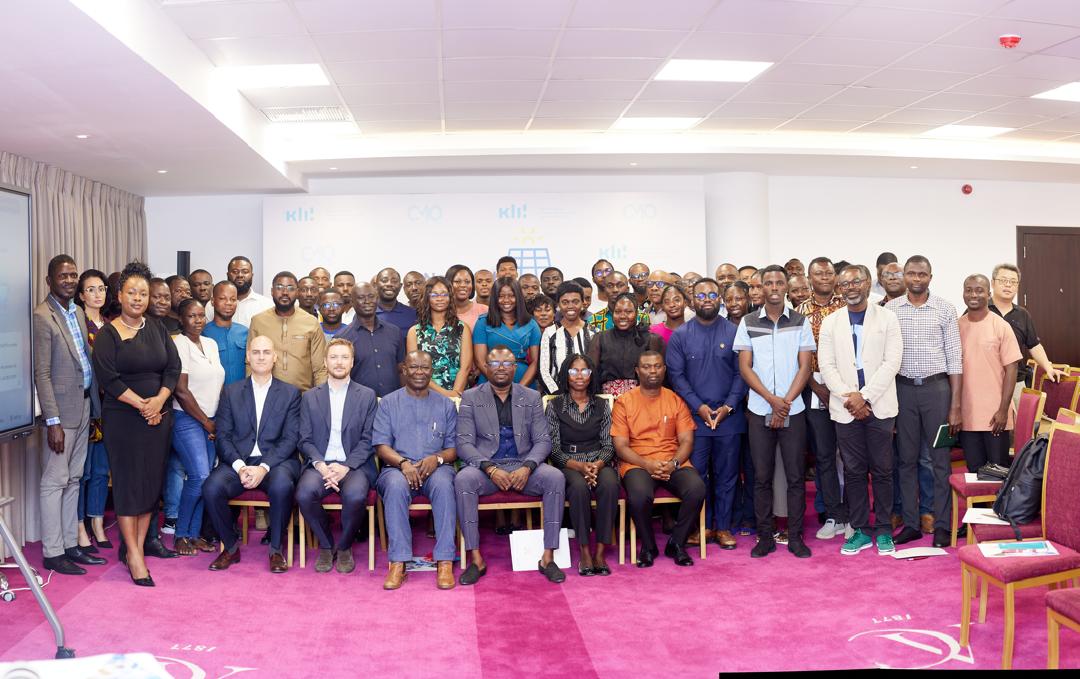

Ghana and Switzerland have unveiled a $200 million National Clean Energy Programme (NCEP), a landmark initiative aimed at expanding rooftop solar installations nationwide while advancing international carbon market cooperation under the Paris Agreement. The programme, launched in Accra, marks Ghana’s first project implemented under Article 6 of the Paris Agreement and only the second such initiative globally.
The NCEP is being rolled out by the KliK Foundation, a Swiss-based climate action organisation, in partnership with Ghana’s Environmental Protection Authority (EPA) and the Ministry of Energy and Green Transition. The project aims to deploy 137 megawatts of rooftop solar systems across households, businesses, and industrial facilities. Officials said the initiative will not only accelerate Ghana’s clean energy adoption but also create green jobs, reduce emissions, and ease the country’s heavy reliance on fossil fuels.
Speaking at the launch, Ghana’s Minister of Energy, John Jinapor, described the programme as a “milestone in Ghana’s energy transition journey,” noting that it aligns with the government’s roadmap to achieve net-zero emissions by 2070. He said the initiative would also help Ghana meet its target of integrating 10 percent renewable energy into its power mix by 2030, up from about 1 percent today. Jinapor stressed that the NCEP reflects the government’s resolve to make renewable energy more accessible and affordable while reducing pressure on the national grid.
Under the arrangement, Swiss funding will be used to subsidise the cost of rooftop solar systems for eligible Ghanaian users. In return, the resulting emissions reductions, known as Internationally Transferred Mitigation Outcomes (ITMOs), will be credited to Switzerland to help meet its national climate targets under the Paris Agreement. Ghana, however, retains a portion of the carbon benefits, which it can count toward its own climate commitments.
This mechanism, outlined in Article 6 of the Paris Agreement, allows countries to collaborate on reducing emissions through market-based approaches, ensuring both parties benefit while avoiding double counting. The partnership represents a significant step forward in operationalising international carbon markets in Africa, where few countries have yet implemented Article 6 frameworks.
Simone Giger, Switzerland’s Ambassador to Ghana, praised the collaboration as a “model for global climate cooperation,” highlighting that it demonstrates how international partnerships can support sustainable growth in developing economies while delivering measurable climate benefits. She said Switzerland views Ghana as a key partner in advancing transparent, equitable, and results-driven climate solutions.
The KliK Foundation, which represents Swiss fuel importers obligated under the country’s climate law, will play a central role in financing and monitoring the project. Its Executive Director, Jürg Baumann, said the initiative builds on years of technical collaboration with Ghana’s EPA to establish clear governance and verification systems for carbon crediting. “This is not just about technology transfer; it’s about trust and shared accountability in reducing emissions,” Baumann said.
Analysts say the project could have far-reaching economic implications. By scaling rooftop solar adoption, Ghana could reduce its annual expenditure on imported fuels, which account for a significant portion of the national energy budget. It could also ease pressure on the national grid, particularly during peak demand periods, and improve energy access in remote areas. The local solar industry is expected to benefit through the creation of installation, maintenance, and manufacturing jobs, supporting the government’s industrialisation and green economy goals.
For Ghana, the NCEP also comes at a critical time. The country has faced growing energy demand amid economic challenges and currency fluctuations that make energy imports increasingly expensive. Expanding local renewable capacity could therefore enhance energy security while helping Ghana meet its international climate commitments.
The programme has drawn praise from environmental groups and policy experts who view it as a proof of concept for how African countries can leverage Article 6 to attract sustainable financing. If successful, the model could be replicated across the continent, helping bridge the funding gap for clean energy transitions in developing economies.
With implementation expected to begin in early 2026, the NCEP signals a new phase in Ghana’s energy transformation, one that blends international cooperation, local innovation, and long-term climate responsibility. As Ghana positions itself as a regional leader in clean energy and carbon market governance, the initiative could shape the future of climate finance partnerships across Africa.