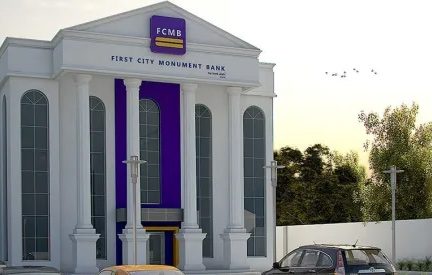

First City Monument Bank (FCMB) has opened applications for a new tranche of interest-free loans aimed at women entrepreneurs, offering facilities of up to N5 million and N10 million as part of a broader push to deepen financial inclusion and support small and medium-sized enterprises (SMEs).
The initiative underscores a growing trend among Nigerian lenders to tailor financial products toward underserved segments, particularly women-led businesses, which face structural barriers to credit access despite their expanding role in the economy.
Under the programme, eligible female entrepreneurs can access funding without the burden of interest payments, an uncommon feature in Nigeria’s high-rate lending environment. Commercial lending rates in the country often exceed 20%, making debt financing prohibitively expensive for many small businesses.
By removing interest costs, FCMB effectively lowers the barrier to entry for business expansion, working capital financing, and operational scaling. Analysts say such interventions could improve survival rates among early-stage enterprises, particularly in retail, agriculture and services sectors where women are disproportionately represented.
The move aligns with FCMB’s long-standing positioning as a retail and SME-focused lender. In recent years, Nigerian banks have increasingly competed on niche offerings, leveraging targeted credit schemes, digital platforms, and partnerships to capture market share in underserved demographics.
For FCMB, the women-focused loan initiative also carries reputational and regulatory advantages. Financial inclusion remains a priority for policymakers, with the Central Bank of Nigeria encouraging banks to expand credit access to marginalized groups as part of broader economic development goals.
Women-owned businesses account for a significant share of Nigeria’s informal and semi-formal economy, yet they continue to face constraints including limited collateral, weaker credit histories, and gender-based biases in lending.
Interest-free financing could help bridge this gap, enabling entrepreneurs to reinvest profits rather than servicing debt. Over time, this may translate into higher business productivity, job creation, and increased household income stability.
However, experts caution that the long-term success of such schemes will depend on effective risk management, transparent eligibility criteria, and complementary support such as financial literacy and business advisory services.
FCMB’s initiative comes at a time when Nigeria’s SME sector is navigating inflationary pressures, currency volatility, and tightening liquidity conditions. Access to affordable capital is widely seen as critical to sustaining growth and resilience.
If scaled effectively, interest-free lending models could reshape SME financing dynamics in Nigeria, prompting competitors to introduce similar products and accelerating progress toward inclusive economic growth.