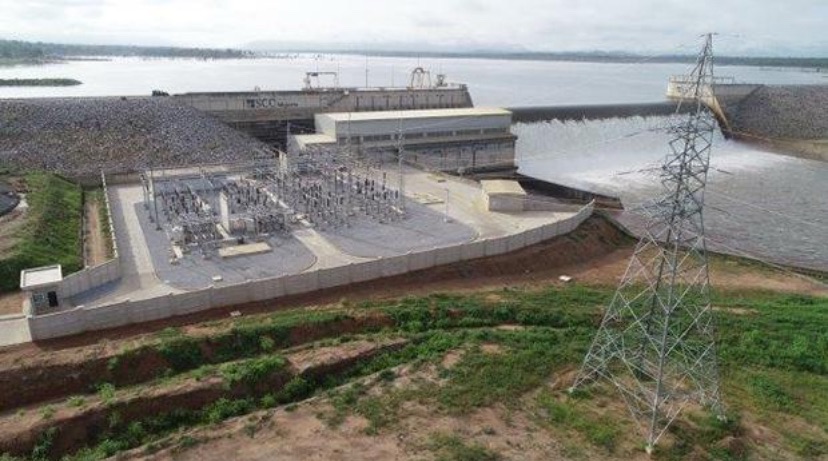

The Federal Government is preparing a new policy that could turn 21 idle dams along the Sokoto-Badagry Road corridor into commercially viable small-scale hydropower projects.
The Minister of Power, Joseph Tegbe, disclosed the plan in Abuja while speaking at the launch of the Renewable Energy Asset Management Company. He said the government discovered the 21 dams during the ongoing construction of the Sokoto-Badagry Road and questioned why infrastructure with potential for economic use had remained inactive for years.
According to the minister, President Bola Tinubu has directed his administration to find ways of putting such public assets to productive use rather than allowing them to remain unused.
The proposed small-scale hydro policy is expected to provide a framework for developing the dams into electricity projects. If successfully implemented, the facilities could add new generation capacity while also creating economic opportunities in communities where the dams are located.
Tegbe said the initiative was part of a wider government strategy to identify stranded, abandoned and underutilised power assets and connect available electricity resources to areas where demand is high.
He identified three major energy corridors that the government is currently prioritising. They include the Lagos axis stretching towards Sagamu and Epe, the Abuja-Kaduna-Kano corridor, and the Enugu-Port Harcourt corridor.
The government is also carrying out technical audits along these corridors to determine the condition of existing electricity infrastructure.
The audits will examine equipment such as insulators, conductors, relays and transmission towers. Tegbe said some of the infrastructure has been in service for about 42 years and requires replacement.
Rather than selling government-owned infrastructure, the Federal Government plans to improve the assets and use them as a stronger financial base for attracting investment.
The minister explained that placing public assets in productive use could improve their value and allow the government to leverage them when funding is required for additional projects.
The renewable energy asset management approach is part of a broader attempt to change how Nigeria manages its electricity infrastructure. Instead of concentrating mainly on building and commissioning new facilities, the government wants to maximise the value of assets that already exist.
Tegbe acknowledged the contradiction in Nigeria’s power sector, noting that the country has substantial energy resources and installed infrastructure but has continued to struggle with reliable electricity supply.
He said the government’s objective goes beyond simply preventing national grid collapses. The long-term plan is to use reliable electricity to support manufacturing, businesses and Nigeria’s growing digital economy.
A key target is to increase the amount of electricity that can be transmitted through the national grid. The government currently estimates wheeling capacity at about 5,000 megawatts and wants to raise it to 6,500MW by the end of 2026 and 8,000MW by the end of 2027.
If the planned projects and infrastructure upgrades are delivered, the government expects the additional capacity to improve electricity supply and reduce pressure on the existing power system.
The proposed development of the 21 idle dams could therefore become an important part of Nigeria’s renewable-energy strategy, while the broader asset-management programme seeks to ensure that existing public infrastructure contributes more directly to economic growth.
For communities along the affected corridors, successful implementation could bring new electricity supply, business opportunities and improved economic activity. However, the success of the plan will depend on funding, technical execution, effective maintenance and the ability to move the projects from policy announcements to actual power generation.