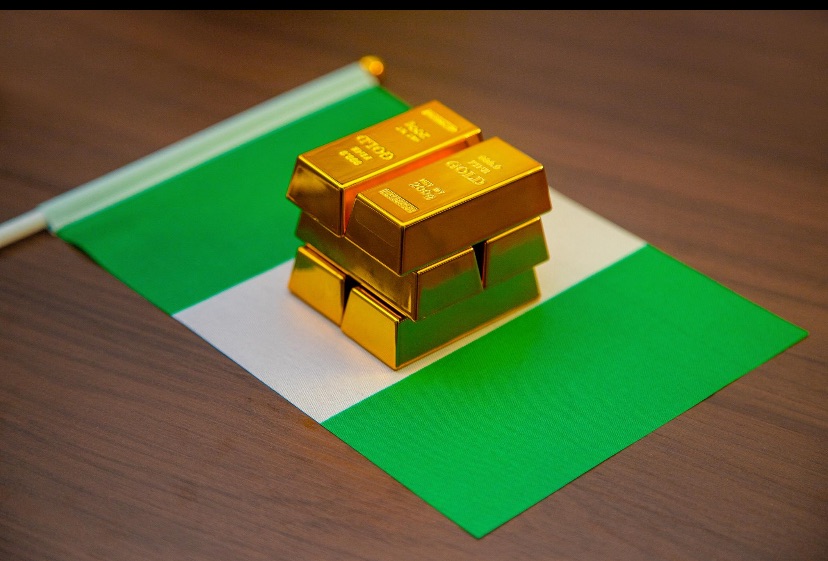

Gold is increasingly attracting the attention of Nigerian investors as people look for ways to protect their money from currency movements, inflation and economic uncertainty.
Unlike shares or fixed-income investments, gold is a physical asset with a global market and can be bought in different forms, including jewellery, bars and coins. Its value is largely determined by international gold prices and the exchange rate, making it particularly interesting to Nigerians dealing with naira volatility.
The strength of the global gold market has provided another reason for investors to pay attention. On August 25, 2026, international spot gold reached $4,696.18 per ounce before easing to around $4,647.03. The rally was supported by a weaker US dollar, expectations around US interest rates and continuing demand for safe-haven assets.
For Nigerian investors, movements in the international price can have a significant impact on the local value of gold. When the dollar price of gold rises or the naira weakens against the dollar, the naira value of locally traded gold can increase.
Recent price data illustrates how expensive gold has become in naira terms. In June 2026, 24-karat gold averaged about ₦185,163 per gram, according to historical gold-price data. The price reached approximately ₦197,622 per gram at its June peak.
This means that an investor buying 10 grams of 24-karat gold around that month’s average price would have needed roughly ₦1.85 million, before considering dealer margins, making gold increasingly an investment for people with substantial disposable funds.
Another factor supporting gold’s appeal is demand from investors and central banks globally. The World Gold Council reported that investment demand excluding over-the-counter transactions stood at 262.2 tonnes in the second quarter of 2026, while bar and coin demand reached 307.1 tonnes. Although total investment demand was lower than the exceptionally strong level recorded in the same quarter of 2025, investors continued to treat gold as a strategic asset.
Central-bank purchases have also strengthened the long-term investment case. Gold’s role as a reserve asset means demand is not dependent only on individual investors. Countries and financial institutions can buy gold to diversify their reserves and reduce dependence on currencies and other financial assets.
For Nigerians, gold also offers a way to diversify wealth. Someone whose savings are entirely held in naira is exposed to changes in the purchasing power of the currency. Holding part of one’s wealth in an asset priced internationally can provide a different source of exposure.
However, gold is not guaranteed to make money. Its price can fall, and investors who buy at exceptionally high prices could suffer losses if the market corrects. There are also practical risks associated with physical gold, including storage, theft, authenticity and dealer spreads.
The recent global price movement shows why caution is important. Gold climbed above $4,600 per ounce in August but has also experienced significant corrections from previous record levels.
For Nigerian investors, therefore, gold’s attraction is not simply that its price is rising. Its appeal comes from its combination of global demand, scarcity, liquidity and its potential role as a hedge against currency and economic uncertainty.
As the Nigerian investment market continues to evolve, gold is likely to remain part of the conversation for people seeking to preserve and diversify their wealth rather than keeping all their savings in cash or a single asset class.