
Nigeria’s Federal Government has set November as its target for completing the final 164-kilometre stretch of the Abuja-Kaduna-Zaria-Kano highway, one of the administration’s flagship infrastructure projects.
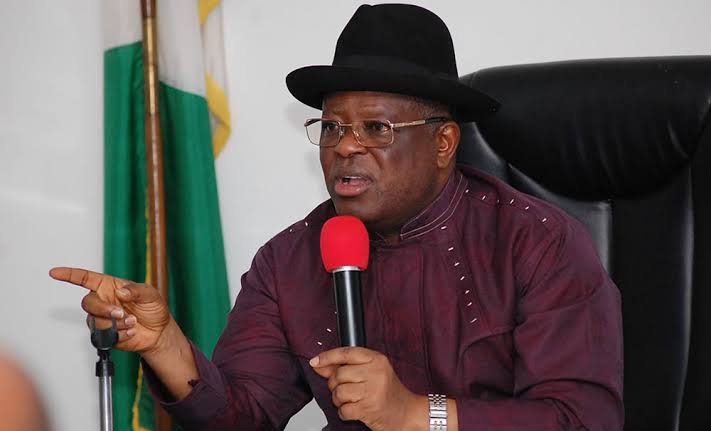
Works Minister Dave Umahi disclosed the timeline on Monday during a courtesy visit by leadership of the National Association of Nigerian Students (NANS) in Abuja. He said the government has spent more than ₦200 billion on the road so far, with the current phase of construction now more than 80 per cent paid for. The remaining works are valued at ₦752 billion.
The full corridor spans 375 kilometres in one direction, roughly 750 kilometres when both carriageways are counted. Julius Berger, the original contractor, completed 240 kilometres on each carriageway before the current administration took over the remaining sections. Umahi said the present government has since laid 118 kilometres of concrete pavement in 30 months, calling it an unprecedented pace for a project that has spanned multiple administrations since construction began in 2018.
Umahi described the highway as one of President Bola Tinubu’s legacy infrastructure projects and said the government would soon deploy solar-powered streetlights along the route, alongside dedicated “superhighway guards” to protect the pavement from vandalism. He said he had personally witnessed people digging up sections of concrete to extract reinforcement rods for resale.
The minister urged Nigerian youth groups to actively monitor federal road projects and hold contractors and officials accountable, adding that the ministry was open to working with NANS and similar organisations on project oversight.
The Abuja-Kaduna-Zaria-Kano corridor is a critical artery linking the capital to Nigeria’s northern commercial and agricultural hubs, running through the Federal Capital Territory, Niger, Kaduna and Kano states. Its completion has been repeatedly delayed since reconstruction was first approved in December 2017, with successive timelines, including an earlier 2026 target set in 2024, slipping amid funding gaps and contractor debt.
Analysts see faster completion of the corridor as material to reducing haulage costs and improving the movement of agricultural produce from the north, a factor the government has previously tied to food price inflation.