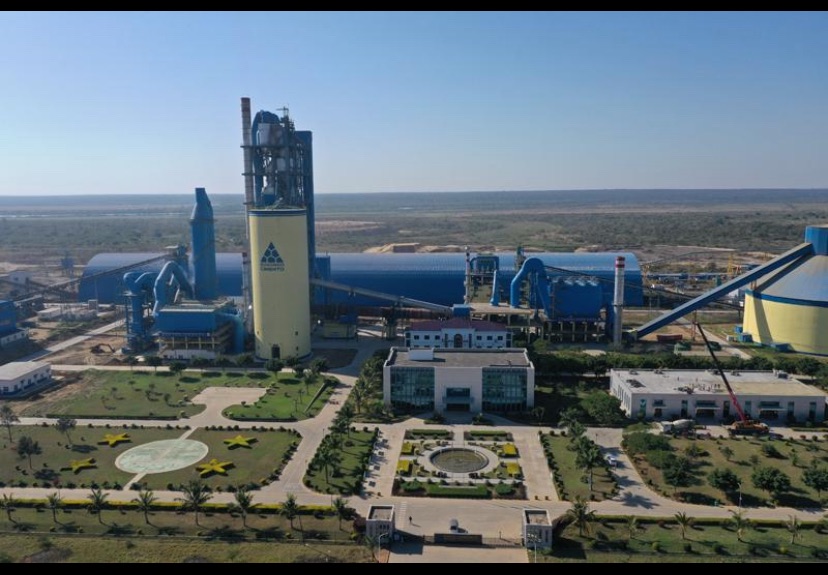

Dangote Industries Limited has announced a major investment of more than $800 million to expand its cement factory in Itori, Ogun State, a move expected to strengthen Nigeria’s manufacturing sector, create jobs, and increase cement exports across Africa.
The company signed a Memorandum of Understanding (MoU) with Chinese engineering giant Sinoma International Engineering Co. Ltd to increase the production capacity of the Itori Cement Plant from six million metric tonnes to 12 million metric tonnes per year.
The agreement was signed by the President of Dangote Group, Aliko Dangote, and the Chairman of Sinoma, Lin Zhong. The expansion is expected to help the company meet rising demand for cement in Nigeria while also supplying more products to other African countries.
According to Dangote Industries, the project represents another important step in its long-term growth plans and its commitment to supporting Nigeria’s industrial development. The company believes the investment will boost local production, reduce dependence on imported building materials in some markets, and strengthen Nigeria’s position as one of Africa’s leading cement producers.
Speaking during the signing ceremony, Aliko Dangote said the investment reflects the company’s confidence in the Nigerian economy despite current economic challenges. He noted that the expansion was influenced by the growing use of concrete for road construction in Nigeria and the company’s ambition to increase exports across the continent.
Dangote explained that the larger plant will not only satisfy increasing domestic demand but also generate more foreign exchange through exports. He added that the project will create employment opportunities, support economic growth, and contribute to regional trade across Africa.
The expansion also aligns with Dangote Group’s Vision 2030, which aims to increase the company’s total cement production capacity to between 90 million and 100 million metric tonnes annually. Achieving this target would further strengthen the company’s leadership in Africa’s cement industry.
Dangote also praised the Federal Government for creating an environment that encourages private sector investment. He specifically acknowledged the efforts of President Bola Tinubu’s administration in promoting policies that support industrial growth and infrastructure development.
For many years, Dangote Industries and Sinoma International have worked together on several cement manufacturing projects across Africa. Their partnership has helped build some of the continent’s largest and most modern cement plants, making Sinoma one of Dangote’s key engineering partners.
Sinoma Chairman Lin Zhong described the new agreement as another major milestone in the relationship between the two companies. He said the project demonstrates their shared commitment to delivering world-class manufacturing facilities and supporting Africa’s industrial transformation.
According to him, Sinoma will provide advanced engineering expertise, modern technology, and global experience to ensure the successful completion of the expansion project. He added that the investment reflects growing international confidence in Nigeria’s industrial sector and highlights the importance of strong partnerships in driving sustainable economic growth.
When completed, the expanded Itori Cement Plant will become one of Nigeria’s largest cement production facilities. It is expected to serve both the local market and export destinations across Africa, helping Nigeria strengthen its role as a regional manufacturing and export hub.
Industry experts believe the project could also support infrastructure development by ensuring a more reliable supply of cement for housing, road construction, bridges, and other major projects. Increased production may also improve Nigeria’s competitiveness in regional markets while generating additional export earnings.
With construction set to move forward under the new agreement, the investment marks another significant milestone in Dangote Group’s expansion strategy and reinforces its commitment to driving industrialisation, job creation, and economic development across Nigeria and the African continent.