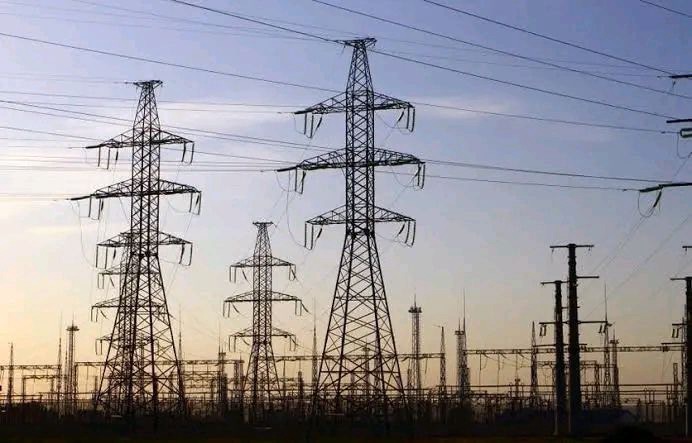

Nigeria’s electricity sector continued to face major challenges in April 2026 as power generation companies operated far below their installed capacity, according to the latest report released by the Nigerian Electricity Regulatory Commission (NERC).
The report revealed that the country’s 28 grid-connected power plants generated only 31 per cent of their total installed capacity during the month. Although there was a slight improvement compared to March, the national grid still suffered from unstable voltage and frequency levels, raising concerns about the reliability of electricity supply across the country.
NERC stated that the average available power generation in April stood at 4,286 megawatts (MW), while the total installed capacity of all the plants combined was 13,625MW. This means that more than two-thirds of the country’s electricity generation capacity remained unused.
Despite the low output, most of the available electricity was successfully distributed. The commission explained that the plants recorded an average hourly generation of 4,048 megawatt-hours per hour, with a load factor of 94 per cent. This shows that nearly all the power available during the period was dispatched to the grid.
However, the report noted that instability within the national grid remained a major issue. Voltage levels stayed outside the approved operating range throughout April. According to NERC, grid voltage averaged 302.60 kilovolts at the lower end and 353.40 kilovolts at the upper end, falling outside the required limit of 313.50kV to 346.50kV.
The commission warned that unstable voltage affects the quality of electricity supplied to homes, businesses and industries. Consumers often experience equipment damage, poor power supply and unexpected outages when voltage levels fluctuate excessively.
The report also showed that system frequency remained unstable. Frequency levels averaged 49.20 hertz on the low side and 50.76 hertz on the high side, exceeding the approved operating range of 49.75Hz to 50.25Hz. Such fluctuations can weaken grid stability and increase the risk of system collapse.
A small number of power plants contributed most of the electricity generated during the month. The top 10 generation companies accounted for about 81 per cent of total power production nationwide.
Among the leading performers was Egbin Power Plant, which generated 557MW from its installed capacity of 1,320MW. Kainji and Jebba hydro plants also recorded strong output levels, while Ihovbor 2 achieved nearly full availability with 459MW generated from a 461MW capacity.
Other plants that performed relatively well included Zungeru, Afam 2, Delta 1, Shiroro 1, Okpai 1 and Odukpani 1.
On the other hand, several power stations delivered very poor results. Olorunsogo 2 generated only 33MW out of its 750MW capacity, while Afam 1 and Sapele Steam 1 recorded extremely low availability levels.
Some plants, including Alaoji 1, Ibom Power 1 and Rivers 1, produced no available generation at all during the period. Geregu 1 and Sapele 2 also struggled with weak performance.
The latest figures highlight the ongoing difficulties facing Nigeria’s power sector despite repeated reforms and investments. Industry experts say improving infrastructure, maintaining power plants and stabilising the national grid will be crucial to achieving reliable electricity supply in the country.