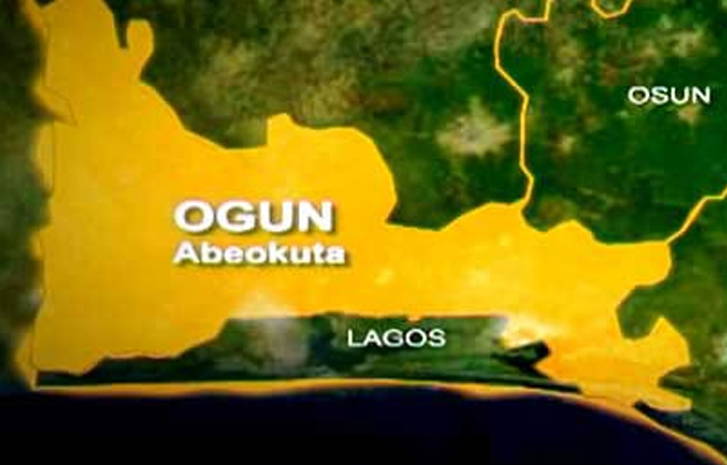

Ogun State’s economic profile reads like a case study in industrial success. Nigerian Breweries, International Breweries, Guinness’s supply chain, Nestlé, Dufil Indomie and dozens of pharmaceutical and chemical manufacturers cluster along the Lagos-Abeokuta and Lagos-Ibadan expressways, drawn by cheap land, tax incentives and proximity to Lagos’s port and consumer market.That
That advantage has translated into factories, warehouses, industrial parks, and one of the strongest internally generated revenue profiles among states created in 1976, with Ogun collecting between ₦80 billion and ₦100 billion annually. (Western Post)The education sector tells a similar growth story.From
From a single university at its creation, Ogun now hosts dozens of tertiary institutions spanning federal, state and private universities, polytechnics and colleges of education, with Olabisi Onabanjo University among those that have expanded significantly.
The Federal University of Agriculture, Abeokuta, Moshood Abiola University of Science and Technology, Tai Solarin University of Education, Babcock, Covenant and Bells Universities all sit within the state, alongside the Federal Polytechnic, Ilaro.
Yet critics argue the state’s physical infrastructure has not kept pace with either its industrial base or its academic footprint.Commentators
Commentators describe a troubling paradox of industrial abundance sitting on infrastructural decay, where poor roads, weak urban planning and underdeveloped public services coexist with multinational factories and logistics hubs.
Some attribute this to uneven distribution of investment rather than a lack of resources. Analysts have pointed to a pattern where successive administrations concentrated major development projects and facility upgrades within the state capital and individual home senatorial districts, leaving other zones, such as Yewa Awori, comparatively neglected despite the area’s industrial and agricultural potential.
The state government disputes the underdevelopment framing. Officials point to ongoing road rehabilitation across the three senatorial districts and continued investment in school infrastructure, including classroom construction, teacher recruitment and the removal of levies in public schools, as evidence of a deliberate, if gradual, strategy under the “Building Our Future Together” agenda.
The tension between these two narratives, sustained industrial and academic expansion against claims of lagging public facilities, is likely to feature prominently as attention turns toward the 2027 governorship race, with rival camps already framing Ogun’s development record as a central campaign issue.
For investors and manufacturers already committed to Ogun’s industrial corridor, the practical question is whether road networks, power supply and logistics infrastructure will expand at a pace that matches the state’s continued pull for new factory investment.