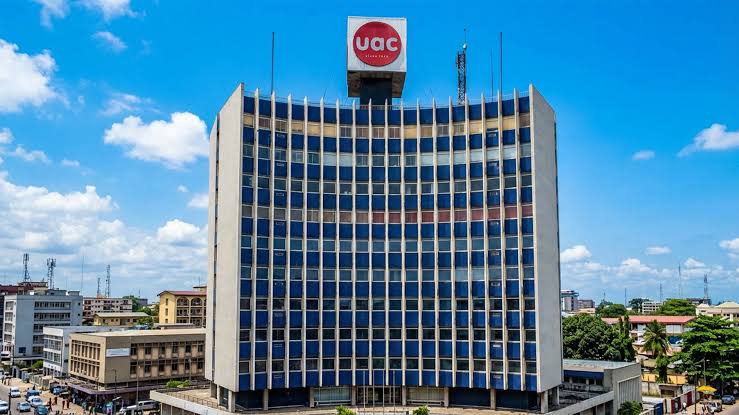

UAC of Nigeria Plc reported a pre-tax profit of N34.45 billion for the first half of 2026, up 210.3% from N11.10 billion a year earlier, as the conglomerate’s landmark acquisition of C.H.I. Limited reshaped its earnings base. The results, filed with the Nigerian Exchange on July 29, mark one of the clearest signals yet that the N182.5 billion deal for the maker of Chivita, Hollandia and Capri-Sun, completed in October 2025 is paying off.
Group revenue more than tripled to N364.97 billion, a 230.6% increase, while gross profit rose 270% to N104.56 billion. Operating profit climbed 288.8% to N48.97 billion. Profit after tax, however, grew more modestly at 176.6% to N19.26 billion, as higher borrowing costs ate into the gains further down the income statement.
The newly consolidated Packaged Food & Beverages segment, now housing the CHI business, generated N307.36 billion, more than 84% of group revenue, and contributed N33.56 billion of the group’s total pre-tax profit. Edibles & Feed added N33.95 billion, while Paints contributed N22.41 billion.
Group Managing Director Fola Aiyesimoju said the results reflected progress on integrating CHI, expanding margins and optimising working capital, adding that net debt had fallen by N37 billion on the back of strong cash generation.
The acquisition’s financing costs remain a notable drag. Interest expense surged to N26.83 billion from N6.18 billion, pushing net finance cost up 338% to N15.9 billion. Gross borrowings stood at N307 billion at half-year, with close to N149 billion due within twelve months, a refinancing task that will likely dominate management’s attention through the rest of the year.
Despite the leverage, cash generation improved sharply: free cash flow rose to N71 billion from N8.8 billion, and net debt-to-EBITDA improved to 2.7 times from 5.9 times. Annualised return on equity more than doubled to 52%, though the company’s return on invested capital, widely seen as a cleaner profitability measure, slipped to 25.2% from 39.6%, underscoring that some of the equity return is leverage-driven rather than purely operational.
Taken together, the half-year numbers suggest UAC’s biggest-ever acquisition has meaningfully scaled the business, even as the conglomerate now carries a heavier debt load into a period of elevated interest rates.