
Nigeria’s federal government says talks are advancing to resuscitate the country’s long-dormant textile factories and the Ajaokuta Steel Company, as part of a broader industrial strategy aimed at lifting manufacturing output and supporting President Bola Tinubu’s ambition of a $1 trillion economy.
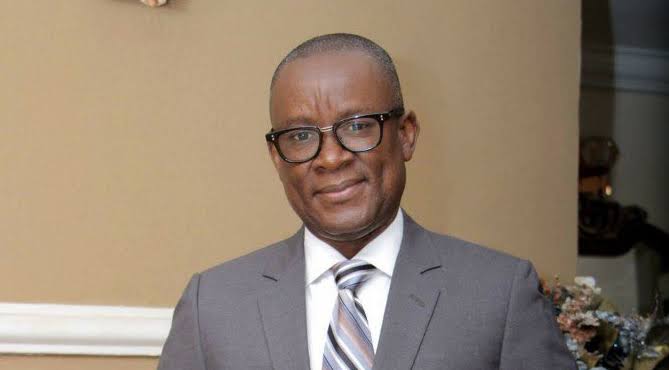
Minister of State for Industry, Senator John Enoh, disclosed the discussions in a Channels Television interview on Tuesday, tying the effort to the National Industrial Policy launched earlier this year. On textiles, Enoh said the government is working to reconnect cotton growers, textile manufacturers and garment producers under a Cotton, Textile and Garment Industrial Transformation Programme, describing the fractured value chain as the sector’s central weakness. He said the government is in discussions with investment partners interested in converting some abandoned textile plants into industrial parks, with agreements potentially concluded within weeks, though no binding deals have yet been signed.
On Ajaokuta, Enoh said he expects to meet an international consortium in the coming days, expressing optimism about the outcome without committing to specifics. His comments align with more detailed statements from the Ministry of Steel Development, which has said separately that it is working toward finalising an agreement with a Chinese investor before the end of 2026, reportedly involving investment in the range of $1.5 billion to $2 billion under a production-sharing arrangement rather than an outright sale. Reports suggest technical assessments found the plant’s core infrastructure viable despite obsolete equipment, though these findings have not been independently verified.
Ajaokuta has remained largely non-operational since construction began in the late 1970s, hampered by funding shortfalls, legal disputes over mining concessions and policy inconsistency across successive administrations. The 2026 budget allocated roughly ₦6.69 billion to the complex, with more than 90 percent reportedly going toward personnel costs rather than production — a figure officials have cited as evidence of the plant’s status as a drain on public finances.
Enoh framed industrialisation as central to Nigeria’s growth agenda, arguing that fiscal and monetary interventions alone cannot substitute for domestic production capacity. Nigeria currently produces a fraction of its estimated annual steel demand, with the shortfall met largely through imports and scrap processing, underscoring the scale of the gap any successful revival would need to close.
Analysts will likely watch for signed agreements and disbursed capital as the real test of intent, given the decades of announcements that have preceded past efforts to revive both sectors without material progress.