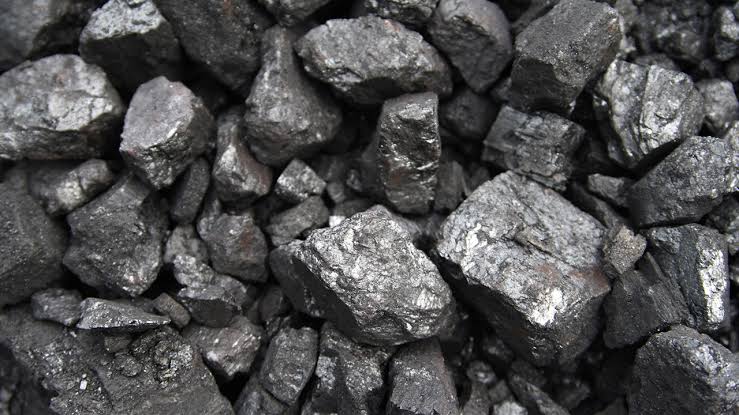

Nigeria is sitting on an estimated three billion tonnes of iron ore, largely concentrated around the Itakpe deposit in Kogi State, according to the National Steel Raw Materials Exploration Agency (NSRMEA). The agency says the reserve is sufficient to sustain a domestic steel industry for decades, reinforcing the resource base envisioned for the long-delayed Ajaokuta Steel Complex.
For NSRMEA Director-General Kolawole Ogunbiyi, the estimate validates the raw-material assumptions behind Nigeria’s most ambitious industrial project. Yet nearly five decades after construction began in the late 1970s, Ajaokuta has yet to commence full commercial steel production, leaving the country’s vast mineral wealth largely untapped.
The challenge is no longer believed to be the availability of raw materials but the absence of an integrated value chain capable of converting them into finished steel. Iron ore accounts for roughly 95% of the raw materials required for steel production, according to NSRMEA, with limestone and coking coal making up the balance. Nigeria possesses substantial limestone deposits, many developed by cement manufacturers, while commercial coking coal deposits exist around Obi-Lafia in Nasarawa State, though the coal still requires beneficiation to reduce impurities.
The more fundamental obstacle lies in the structure of Nigeria’s steel industry. The original development model assigned exploration to NSRMEA, mining to the National Iron Ore Mining Company (NIOMCO) at Itakpe, and steel production to Ajaokuta. Because Ajaokuta has never operated commercially, mining at Itakpe has remained below potential, with limited demand for large-scale extraction. In practical terms, the reserve estimate offers little economic value until the processing plant designed to consume the ore becomes operational.
Ajaokuta’s history counsels caution. The project has survived decades of delays, policy reversals, financing challenges and an unsuccessful concession attempt in 2003 involving Solgas Energy. Successive governments have pledged to revive the complex, but commercial production has remained elusive.
The current administration has taken more concrete steps than prior attempts: Steel Development Minister Sha’ibu Abubakar Audu says talks with a Chinese investor over a $1.5–2 billion revival package, structured as a production-sharing arrangement rather than an outright sale, are in advanced stages, with a signed agreement targeted before year-end. Ajaokuta has also signed a 20-year gas supply agreement with NNPC, and a technical audit of the plant’s condition is underway. No firm timeline for full commercial operations has been confirmed.
The stakes extend well beyond the steel sector. Nigeria continues to rely heavily on imported steel products used in construction, manufacturing, infrastructure and automobile assembly, contributing to foreign exchange demand and exposing local industries to global price volatility.
Ultimately, Nigeria’s estimated three billion tonnes of iron ore represent a strategic industrial asset rather than a guarantee of industrial success. Unlocking that potential will require synchronizing mining at Itakpe, completing Ajaokuta, securing reliable coking coal supply and implementing consistent industrial policies capable of sustaining an integrated steel value chain.