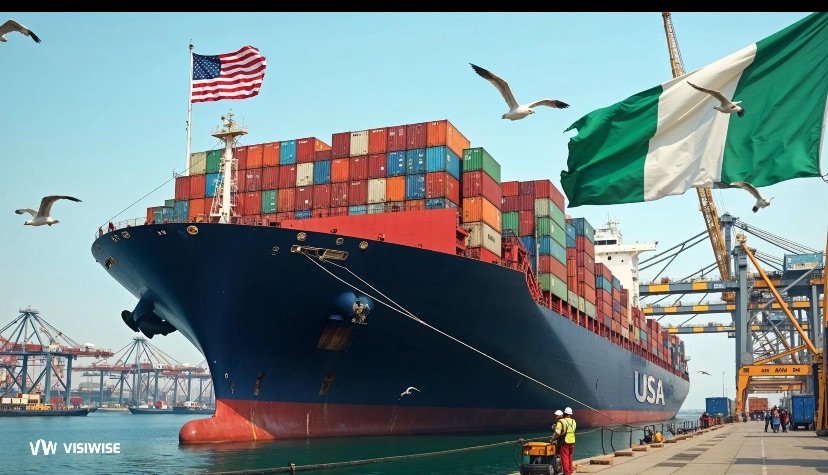

Nigeria’s organised private sector has expressed concern over the United States’ decision to impose a 12.5 per cent tariff on selected Nigerian exports, warning that the move could reduce the competitiveness of local businesses, especially small and medium-sized exporters.
Business leaders, however, believe the situation can still be resolved through diplomatic engagement and improvements in Nigeria’s trade regulations.
The new tariff, announced by the United States on July 23, forms part of a broader trade policy affecting imports from 60 countries, including Nigeria. According to U.S. authorities, the measure targets countries that have not fully prohibited the importation of goods produced with forced labour.
Countries such as India, Indonesia, Malaysia, Mexico and the United Kingdom will face a lower 10 per cent tariff after adopting or committing to stronger measures against forced labour in their supply chains.
Speaking on the development, the President of the Nigerian-American Chamber of Commerce, Sheriff Balogun, said Nigeria supports the global campaign against forced labour and believes constructive dialogue with the United States is the best way forward.
He explained that the tariff should not be viewed as a hostile action but as an opportunity for Nigeria to improve supply chain documentation, strengthen trade standards and demonstrate that Nigerian exporters operate legitimate businesses.
Balogun admitted that some exporters would feel the impact of the additional duty, particularly businesses involved in non-oil exports such as processed cocoa, sesame seeds, cashew products, leather goods and light manufacturing.
According to him, a 12.5 per cent tariff is significant for smaller exporters because it raises the final cost of Nigerian products in the U.S. market, making them less competitive against goods from other countries.
He noted, however, that several important raw materials have been exempted from the tariff, meaning a large portion of trade between Nigeria and the United States will continue without disruption.
Balogun also expressed confidence that the tariff could eventually be reviewed if Nigeria strengthens its regulatory framework and addresses the concerns raised by U.S. authorities. He added that the Nigerian-American Chamber of Commerce is prepared to work with both governments and support exporters in improving product certification and supply chain transparency.
The Director-General of the Lagos Chamber of Commerce and Industry, Dr. Chinyere Almona, also warned that the new tariff could increase the landed cost of Nigerian goods in the United States, reducing their appeal to buyers.
She explained that exporters that depend heavily on the American market and operate on narrow profit margins would be the most affected. Businesses involved in agriculture, manufacturing, logistics and export services could also experience indirect effects.
Almona called on the Federal Government to urgently engage U.S. trade officials, strengthen customs regulations, improve enforcement against forced labour-related imports and carry out a detailed assessment to determine which sectors are most exposed to the policy.
Similarly, the Chief Executive Officer of Widescope Group, Dr. Segun Musa, said the tariff would make Nigerian exports more expensive in the American market, reducing demand and potentially affecting investment, employment and foreign exchange earnings.
He encouraged the Federal Government to deepen diplomatic discussions with the United States while also helping exporters improve their competitiveness and explore new international markets beyond America.
Offering a more measured view, the Chief Executive Officer of the Centre for the Promotion of Private Enterprise, Dr. Muda Yusuf, said the overall economic impact may not be as severe as many fear.
He explained that most of Nigeria’s exports to the United States are still dominated by products that are not affected by the new tariff. However, he noted that the development serves as a reminder that Nigeria must diversify its exports, strengthen manufacturing, improve labour standards and increase regional trade.
Industry experts agree that while the tariff presents a short-term challenge for some exporters, it also provides an opportunity for Nigeria to modernise its export systems, improve compliance with international standards and build a more competitive presence in the global marketplace.