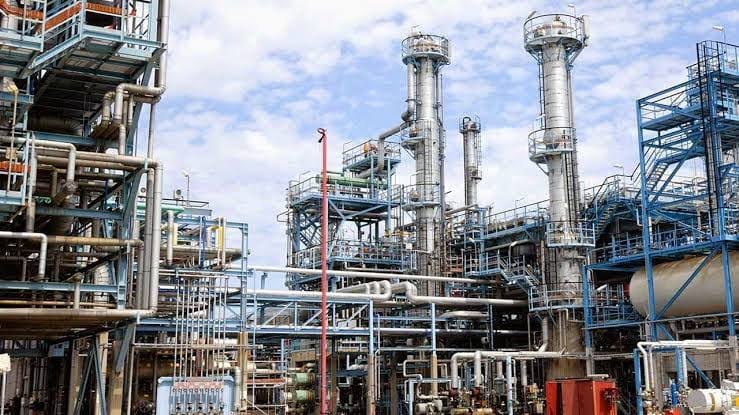

The Port Harcourt Refinery, Nigeria’s largest state-owned refining complex, has become a symbol of the country’s long-running struggle to restore domestic refining capacity despite decades of investment and repeated rehabilitation efforts.
Commissioned in 1965 with an initial processing capacity of 35,000 barrels per day (bpd), the refinery was expanded to 60,000 bpd in 1972. A second 150,000-bpd plant, commissioned in 1989, increased the complex’s total installed capacity to 210,000 bpd. However, years of inadequate maintenance, ageing infrastructure, operational inefficiencies and inconsistent funding steadily reduced output, leaving the facility largely inactive for years and forcing Nigeria to rely heavily on imported refined petroleum products.
Successive rehabilitation programmes over more than two decades failed to restore sustained commercial operations. In March 2021, the Federal Executive Council approved a $1.5 billion rehabilitation of the refinery, with Italy’s Tecnimont S.p.A. serving as the engineering, procurement and construction contractor.
The old 60,000-bpd refinery resumed operations in November 2024, with NNPC Ltd initially reporting production at about 70% of installed capacity while stating that overall rehabilitation of the complex was approximately 88% complete.
The restart, however, proved short-lived. Operations were suspended again in May 2025 as technical and commercial challenges persisted. NNPC Group Chief Executive Officer Bayo Ojulari later said the refinery had been operating at a significant financial loss before the shutdown, estimating monthly. He also disclosed that less than 40% of crude processed was converted into finished petroleum products, raising concerns about the facility’s operational efficiency.
The refinery’s difficulties have unfolded alongside major changes in Nigeria’s downstream petroleum sector. The commencement of large-scale production at the 650,000-bpd Dangote Refinery has significantly reduced the country’s dependence on imported petrol. Trade data for March 2026 indicated that Nigeria exported more petrol than it imported during the month, marking a notable shift in the country’s refined fuel trade balance.
Looking ahead, the future of the Port Harcourt Refinery will depend on stronger corporate governance, commercial discipline and sustained technical expertise. In May 2026, NNPC signed a memorandum of understanding with Chinese firms to explore cooperation on the rehabilitation and expansion of the Port Harcourt and Warri refineries.
Whether the latest initiative succeeds where previous interventions fell short is likely to remain a key test of Nigeria’s ability to reform its state-owned energy assets and maximise value from its hydrocarbon resources.