
The Federal Government has stressed the need for Nigeria to build a stronger, fairer, and more effective tax system to generate enough revenue for national development and the achievement of the Sustainable Development Goals (SDGs).
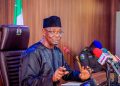
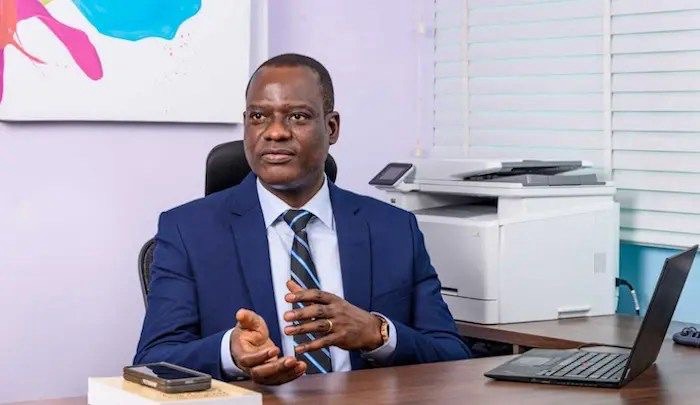
Speaking at a capacity-building session in Abuja, the Minister of Finance and Coordinating Minister of the Economy, Taiwo Oyedele, said Nigeria’s current tax revenue remains too low to support the country’s growing development needs. The event brought together Chairpersons of State Internal Revenue Services, members of the Joint Revenue Board, and a delegation from Ethiopia studying Nigeria’s Integrated National Financing Framework (INFF).
According to Oyedele, every nation must rely mainly on its own resources to fund critical sectors such as healthcare, education, infrastructure, and social welfare. He noted that depending heavily on foreign aid is not a sustainable option for long-term development.
The minister explained that although Nigeria’s tax-to-GDP ratio has improved in recent years, it is still below the level required to support the country’s ambitions. He said increasing tax revenue would provide more funds for public services and create greater economic opportunities for citizens.
However, Oyedele emphasized that the government’s goal is not to place additional tax burdens on Nigerians. Instead, the focus is on creating a tax system that is transparent, efficient, fair, and supportive of economic growth. He added that improving voluntary tax compliance remains a key priority.
To achieve this, he urged State Internal Revenue Services across the country to work more closely together through the Joint Revenue Board. He said stronger collaboration, better information sharing, and improved tax administration would help increase revenue collection efficiency.
The minister also highlighted the wider challenge facing Africa. He noted that many African countries are struggling to secure enough funding to achieve both the United Nations Sustainable Development Goals and the African Union’s Agenda 2063 development plan.
According to him, reduced access to concessional financing, climate-related challenges, and the economic effects of the COVID-19 pandemic have placed additional pressure on government finances across the continent.
Despite these challenges, Oyedele expressed optimism about Africa’s future. He said countries must focus on better mobilization and management of available resources rather than concentrating solely on financial shortages.
Speaking on Nigeria’s Integrated National Financing Framework, he revealed that the country has made significant progress. These include the establishment of a multi-stakeholder steering committee, the completion of a Development Finance Assessment, and the creation of financing strategies linked to the nation’s Medium-Term National Development Plan.
He added that the framework has helped improve domestic revenue generation, expand digital tax administration, strengthen accountability, and attract investment through green and sustainability-linked financial instruments.
Oyedele described the INFF as a flexible framework that will continue to adapt to changing economic conditions. He reaffirmed Nigeria’s commitment to encouraging private-sector investment, attracting climate finance, and strengthening funding systems at both federal and state levels.
Welcoming the Ethiopian delegation, the minister said both countries face similar challenges, including large youth populations, infrastructure gaps, and the need for sustainable economic growth. He encouraged both sides to exchange ideas and learn from each other’s experiences.
Concluding his remarks, Oyedele stated that Africa has the talent, creativity, and ambition needed for transformation. He said the key challenge is ensuring that resources are properly aligned with development priorities and supported by strong institutions capable of delivering lasting results.