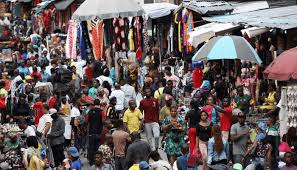

Some residents of the Federal Capital Territory say they have scaled down their Easter celebrations in response to rising economic pressures, reflecting the impact of sustained inflation and high living costs on household consumption patterns during the holiday period. The residents spoke in separate interviews with the News Agency of Nigeria (NAN) on Friday in Abuja, noting that while Easter remained spiritually significant, the rising cost of living had compelled them to rethink their usual celebration plans.
A resident of the FCT, Miss Favour Ayuba, said financial constraints had left her with no option but to forgo elaborate celebrations. She said she would spend the period resting at home with her extended family. “Things are hard and I don’t have money to travel or celebrate in a big way, so I will stay at home with my family and relax,” she said. Ayuba added that celebrating the “reason for the season” in church was more meaningful than engaging in recreational activities that required additional spending.
Similarly, Miss Titilayo Alabi, a resident of Gwagwalada, said she could not afford new clothes for the season due to the high cost of tailoring services but would observe the celebration quietly at home. She said that financial constraints would not deter her joy, stressing that the spiritual significance of Easter remained paramount. Alabi added that the high cost of transportation discouraged visitations within the city, a common sentiment among residents who would traditionally travel to visit family or friends during the holiday.
Another resident, Mrs Abiemwense Moru, a civil servant, said her family had initially planned to travel for Easter but cancelled the trip at short notice following a change in arrangements by their intended hosts. She said the family might either stay indoors or engage in social activities after church service on Sunday, depending on circumstances. Moru attributed the inability of many residents to celebrate extensively to rising living costs and urged the government to go beyond policy pronouncements by ensuring effective implementation of measures aimed at easing economic hardship.
Mrs Ese Williams, a resident of Kubwa, said she would attend church services and spend time with friends instead of travelling due to high transportation costs. Williams described Easter as a period of gratitude and reflection but expressed concern over the rising cost of fuel, transportation and food. “Many Nigerians are struggling to meet basic needs, especially food. In spite of the challenges, I am optimistic that the Easter celebration will foster more unity, hope and love among Nigerians. It is the Holy week for Christians and the time to share love, while remaining hopeful and trusting God for a turnaround in the economic situation,” she said. She called on the government to improve infrastructure, electricity supply, healthcare and security, while also addressing the rising cost of fuel and basic necessities.
From an economic perspective, the scaled-down celebrations reflect the cumulative impact of sustained inflationary pressures on household disposable income. The cost of food, transportation, and housing has remained elevated despite moderation in headline inflation figures. For many households, the decision to forgo travel, new clothing, or festive meals represents an adaptation to budget constraints that leave little room for discretionary spending. Easter, like Christmas and Sallah, traditionally sees increased consumption across retail, hospitality, and transport sectors. Reduced spending during these periods therefore has multiplier effects on businesses that depend on seasonal demand.
The transportation cost dimension is particularly significant. With fuel prices having increased multiple times over the past year, intercity travel has become substantially more expensive. Residents who would typically travel to their home states or other cities to celebrate with extended family now find that the cost of transport consumes a significant portion of their holiday budget. This has led to a shift toward localised celebrations or staying at home entirely, affecting bus companies, taxi services, and other transport providers that rely on holiday travel.
The decision to forgo new clothing also reflects the impact of inflation on textile and tailoring services. The cost of fabric, tailoring labour, and accessories has increased, making it difficult for many households to maintain the tradition of buying new outfits for holidays. For tailors and fabric sellers, reduced demand during the Easter period compounds broader economic pressures that have already affected their customer base.
Williams’s call for government action on infrastructure, electricity, healthcare, and security speaks to the broader context in which economic pressures are felt. While immediate concerns about food and transport costs dominate household budgets, residents also recognise that sustainable improvements in living standards require systemic investments. Improved electricity supply reduces reliance on expensive generators, better healthcare reduces out-of-pocket medical expenses, and enhanced security creates conditions for economic activity to thrive.
The residents’ emphasis on the spiritual significance of Easter despite financial constraints highlights the resilience of cultural and religious practices in the face of economic hardship. For many, the meaning of the holiday is not diminished by the inability to celebrate elaborately. However, the cumulative effect of repeated scaled-down celebrations across multiple holidays may affect the social fabric and community cohesion that festive periods traditionally strengthen. As residents spend more time at home and less time visiting or hosting, the opportunities for social interaction and mutual support may diminish.
For policymakers, the testimony of FCT residents provides a ground-level perspective on how economic reforms are affecting household welfare. While macroeconomic indicators may show progress on inflation and exchange rates, the lived experience of many Nigerians remains one of constraint and adaptation. The government’s Renewed Hope agenda includes social protection measures intended to cushion the impact of reforms, but residents like Moru argue that implementation has not kept pace with policy announcements.