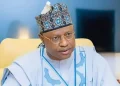
The Rivers State Government has disclosed that it expended over N302 billion in the six months between October 2024 and March 2025, representing a significant fiscal outlay that reflects the scale of governance operations in one of Nigeria’s oil-rich states. The expenditure, which covers both recurrent and capital components, was detailed in an official release that provides a rare window into the state’s financial administration during a period of political transition under the leadership of sole administrator, Vice Admiral Ibokette Ibas (retd).
The N302 billion spending figure underscores the substantial fiscal resources required to maintain governance functions in Rivers State, which remains a major contributor to Nigeria’s oil and gas production and consequently receives significant federal allocations alongside its internally generated revenue. The expenditure covers personnel costs, overheads, debt servicing, and capital projects, though the specific breakdown has not been fully detailed in the initial disclosure. The six-month period captures spending during a politically charged period following the declaration of a state of emergency and the suspension of elected officials.
From a fiscal policy perspective, the expenditure level raises questions about the state’s revenue position and the sustainability of its spending trajectory. Rivers State has historically maintained one of the higher internally generated revenue profiles among Nigerian states, benefiting from its industrial base and commercial activity in Port Harcourt. However, the N302 billion six-month run rate annualises to over N600 billion, a figure that requires careful examination against the state’s actual revenue inflows, including federal allocations, VAT receipts, and internal collections.
The Ibas administration, which assumed office following the declaration of a state of emergency, has been tasked with maintaining governance continuity while addressing underlying political tensions. The expenditure disclosure represents an effort at transparency regarding the use of public funds during the interim period. Civil society groups and economic analysts have called for detailed breakdowns of the spending, including verification that all disbursements followed due process and were directed toward legitimate governance purposes rather than political consolidation.
The implications for investors and businesses operating in Rivers State are significant. The state’s fiscal health affects its ability to honour contractual obligations, maintain infrastructure, and provide the public services that support economic activity. Large expenditure on recurrent costs, including personnel and overheads, may constrain the resources available for capital investment in roads, healthcare, education, and security—all of which factor into business location decisions and operational costs. The disclosure of spending levels, while welcome, must be accompanied by information on outcomes achieved during the period.
The situation in Rivers State also carries broader implications for fiscal federalism in Nigeria. As one of the states with the highest revenue-generating capacity, its financial management practices are closely watched by multilateral partners, credit rating agencies, and potential investors. Any perception of fiscal mismanagement or lack of transparency could affect not only the state’s ability to access development finance but also the perception of subnational governance across Nigeria’s federation. Conversely, a well-documented expenditure record that demonstrates accountability could strengthen confidence in the state’s administrative systems.
For residents of Rivers State, the N302 billion expenditure represents public funds that could translate into tangible improvements in living standards if directed toward productive investments. Schools, hospitals, roads, water supply, and security infrastructure all require sustained funding to deliver services that meet population needs. The coming months will determine whether the spending recorded during this six-month period yields measurable improvements in public welfare or merely sustains the machinery of governance without transformative outcomes.