
A coalition of 46 civil society organisations (CSOs) has urged the Federal Government to establish a special presidential investigative panel to probe the alleged loss of approximately 780 hectares of Nigerian maritime waters within the Cross River estuary.
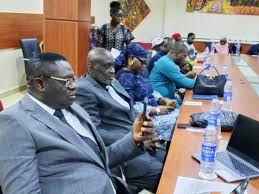
Under the aegis of the Centre for Credible Leadership and Citizens Awareness (CCLCA), the coalition presented its findings and recommendations during a briefing in Abuja on Thursday, March 12, 2026.The structural and territorial consequence of the coalition’s report centers on a fact-finding mission conducted in collaboration with 12 frontline rights groups.
The Director-General of CCLCA, Dr. Gabriel Nwambu, stated that the mission focused on the maritime boundaries of the Gulf of Guinea and the “mouth of water” delineations between Nigeria and Cameroon. The findings suggest a significant erosion of Nigerian sovereignty in the region and have raised critical questions regarding the internal ownership status of oil wells between Cross River and Akwa Ibom states.
Analytically, the coalition’s recommendations target both domestic fiscal policy and international boundary disputes. A primary demand is for the Presidential Special Investigation Panel to examine the specific circumstances that led to the loss of the 780 hectares. Furthermore, the group called for a presidential review of the 2024 and 2025 Inter-Agency Committee Reports on oil well verification and derivation allocation.
They also emphasized the need for a forensic audit of revenues from the Ekanga and Zafiro transboundary oil fields, alongside an investigation into an alleged unauthorized ₦33 billion payment from the Federation Account.The impact on “Littoral Status and Diplomatic Relations” remains a vital dimension of this advocacy.
Dr. Nwambu urged the Federal Government to formally restore and recognize Cross River State’s littoral status, citing both geographic and legal justifications. On the international front, the CSOs recommended a proper demarcation of the Nigeria–Cameroon maritime boundary in strict accordance with the 2002 International Court of Justice (ICJ) judgment map.
This includes the need for diplomatic engagement with Cameroon to negotiate transboundary reservoir development agreements for 49 identified continuity wells.Furthermore, the coalition expressed concern over the transparency of the current maritime administration. They argued that the unilateral approval of massive financial disbursements without explicit presidential authorization undermines the rule of law and fiscal discipline.
CSOs Probe Loss of 780 Hectares in Cross RiverBy calling for a high-powered investigative panel, the CSOs aim to ensure that Nigeria’s maritime assets and derivation revenues are protected from administrative negligence or external encroachment.The long-term outlook for the Cross River maritime corridor hinges on the Federal Government’s willingness to address these boundary and revenue grievances.
As the 13% derivation principle remains a point of contention between neighboring states, a definitive presidential intervention could provide much-needed clarity on the “littoral” status of Cross River. For the communities along the Gulf of Guinea, the successful implementation of these recommendations could mean improved security and a fairer share of the nation’s oil wealth.