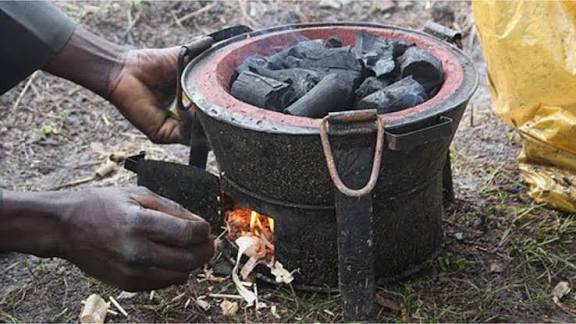

Households in Abuja are increasingly turning to firewood and charcoal as the cost of liquefied petroleum gas (LPG), commonly used for cooking, surges to about N2,000 per kilogram, underscoring Nigeria’s deepening energy affordability crisis.
The price spike reflects a combination of foreign exchange pressure, constrained domestic supply, and higher import costs in Nigeria, where LPG remains heavily tied to global energy markets despite efforts to expand local production.
As naira volatility persists and importers struggle to access dollars at stable rates, distribution costs have risen sharply, pushing retail prices beyond the reach of many urban households.
In Abuja’s lower- and middle-income districts, residents say they are reverting to traditional biomass fuels, a shift that economists warn could reverse years of progress in clean cooking adoption.
Energy analysts note that the LPG market has become increasingly sensitive to global freight costs and domestic bottlenecks, including limited storage infrastructure and inconsistent supply from domestic refineries.
The economic pressure is also being felt across food vendors and small businesses, many of whom rely on gas for efficiency but now face higher operating costs that are often passed on to consumers.
Public health experts caution that increased reliance on firewood and charcoal could worsen indoor air pollution, raising risks of respiratory illnesses, particularly among women and children.
Policy responses have so far focused on market stabilization and long-term gas infrastructure expansion, but analysts say short-term relief remains limited without broader currency stabilization and improved refining capacity.
With inflationary pressures still elevated and household incomes stretched, the shift away from cleaner fuels highlights the broader challenge of energy poverty in urban Nigeria.
Economists say the development also feeds into broader inflation dynamics, as cooking fuel remains a key component of household consumption baskets tracked in Nigeria’s consumer price index, amplifying cost-of-living pressures.
Some policymakers have pointed to ongoing efforts to expand domestic gas processing capacity and improve pipeline infrastructure, but analysts argue that these measures will take time to meaningfully reduce import dependence.
Market watchers say LPG prices are likely to remain volatile in the near term, particularly if foreign exchange liquidity does not improve and global energy costs remain elevated.