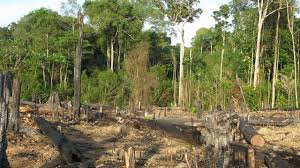

In a major push to preserve Nigeria’s dwindling rainforests, civil society organizations and conservation experts issued an urgent demand on Wednesday, February 25, 2026, for the immediate amendment of the Cross River State Forestry Law, 2010. During a briefing in Calabar, stakeholders revealed a staggering ecological decline, noting that the state has already lost over 60% of its original forest cover to rampant logging and unregulated trade.
The environmental and structural consequence of this depletion is a state of crisis where once-dense rainforests are rapidly degrading into grasslands. Presenting a comprehensive policy brief, Dr. Martins Egot warned that thousands of logs are extracted daily through both legal and illegal channels. He emphasized that the 2010 law, while once considered progressive, is now entirely inadequate to address modern ecological threats, unregulated hunting, and the sophisticated nature of contemporary forest crimes.
Analytically, the stakeholders identified critical legislative gaps that have fueled this decline. A primary concern is Section 19 of the current law, which governs the Forest Reserve Fund; it lacks specific mandates on what proportion of revenue must be paid into the fund and how those resources should be utilized. This ambiguity, according to the report, undermines financial accountability. Furthermore, Ken Henshaw of We The People highlighted a significant institutional flaw: the office of the Conservator-General is mentioned in the law but is never formally established, leaving a vacuum in professional qualifications and oversight powers.
The impact on “Economic Diversification and Climate Finance” is a vital dimension of the proposed reforms. Experts pointed out that global climate funding reached approximately $1.46 trillion in 2022, yet Cross River remains largely excluded due to its weakened legal framework. By strengthening forestry laws, the state could pivot from extractive logging to sustainable revenue streams such as carbon financing and ecotourism, which offer more lucrative and long-term economic stability for forest-dependent communities.
The policy brief recommends specific priority areas for reform, including alignment with global climate change commitments, stronger legal deterrence against forest crimes, a total restructuring of governance mechanisms, the promotion of nature-based economic alternatives, and the protection of the rights of indigenous communities.
The long-term outlook for Cross River’s biodiversity depends on the state government’s willingness to move beyond minor adjustments. As former lawmaker Rt. Hon. Nelson Ofem noted, the current legislation is simply too weak to safeguard what remains of the state’s natural heritage. Stakeholders warned that the failure to act decisively now could result in the permanent loss of one of Africa’s most significant ecological assets.