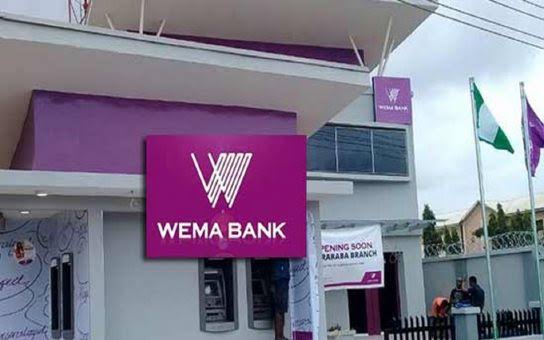

Wema Bank is positioning itself for a more prominent role in Nigeria’s highly competitive financial sector as the lender explores acquisition opportunities to strengthen its balance sheet, expand market share, and accelerate its transition into the country’s Tier 1 banking category.
With the Central Bank of Nigeria (CBN) expected to raise minimum capital requirements for commercial banks from ₦25 billion to as high as ₦500 billion under its ongoing recapitalisation drive, mid-sized lenders like Wema face an existential choice: merge, acquire, or risk irrelevance. Wema’s current shareholders’ funds stood at approximately ₦167 billion as of Q3 2025, well short of projected Tier 1 thresholds.
Management confirmed the bank is evaluating strategic targets that could deepen its footprint across retail banking, corporate lending, and digital financial services. Industry analysts note that acquisitions could give Wema faster access to new customer segments, regional expansion into underserved northern and eastern corridors, and immediate capital buffers without prolonged rights issues.
Tier 1 banks in Nigeria Access Holdings, Zenith Bank, GTCO, and UBA each maintain assets above ₦10 trillion and capital adequacy ratios comfortably over 15 percent. Wema, with assets near ₦3 trillion, remains firmly in Tier 2.
Offensive and defensive rationale: The bank has built a strong reputation through ALAT, one of Nigeria’s earliest fully digital banking platforms. However, analysts warn that digital strength alone cannot shield against rising inflation, FX volatility, and the CBN’s stricter liquidity ratios. “Scale is no longer optional, it’s a licence to compete,” one Lagos-based banking analyst noted.
Wema has not disclosed specific targets or deal structures. However, banking lawyers familiar with the process say the lender is considering a mix of vendor financing, a concurrent rights issue, and possible earn-outs to reduce upfront cash pressure. Any acquisition requiring CBN approval must also pass a “fit and proper” test for incoming shareholders, a potential hurdle if funding relies on new, unvetted investors.
If executed successfully, a well-priced acquisition could improve Wema’s earnings capacity, enable large-ticket corporate lending, and reposition it as a challenger Tier 1 player within three to five years. But in a volatile macroeconomic environment, overpaying or integrating poorly could erode the very digital agility that makes Wema attractive today.
Success would redefine the bank’s standing within Nigeria’s financial hierarchy and reshape competition across the country’s banking landscape.