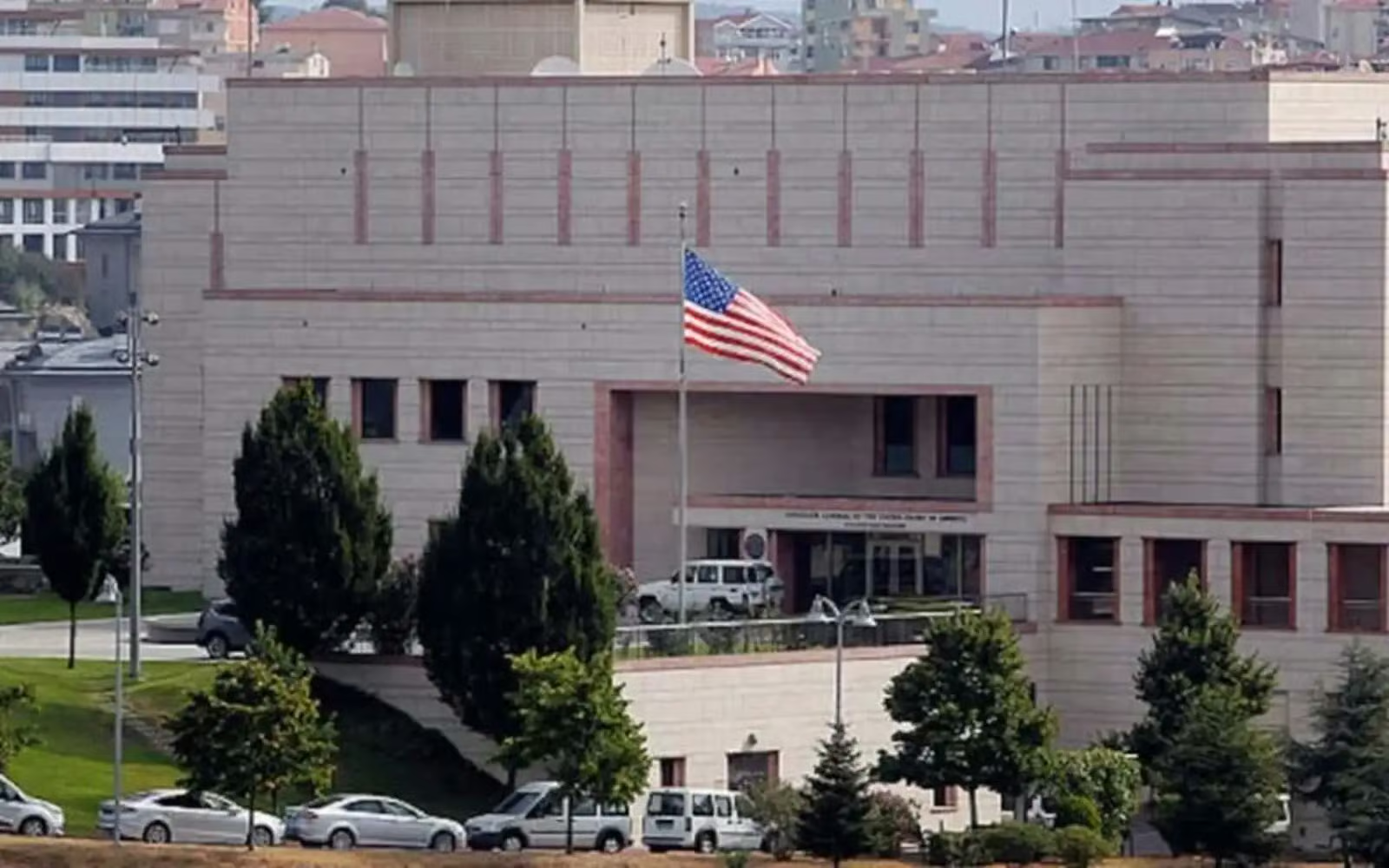

The United States government has reduced its operational footprint in Nigeria, directing a portion of its embassy workforce in Abuja to depart as security concerns intensify across the country. The decision, announced in a revised travel advisory by the US Department of State, forms part of a broader reassessment of safety conditions. Under the updated guidance, Nigeria remains under a Level 3 advisory urging Americans to reconsider travel, while a significant number of states have been escalated to Level 4—the highest warning category.
The department said the drawdown affects non-essential personnel and their dependents, citing what it described as a fluid and unpredictable security environment. Beyond the personnel adjustment, the updated guidance significantly expands areas considered unsafe, with 23 states now listed under the strictest caution level. Among the newly elevated states are Plateau, Jigawa, Kwara, Niger and Taraba, a move that reflects the widening spread of insecurity beyond previously known flashpoints.
The advisory outlines a broad range of risks, including organised criminal activity, kidnapping networks, terrorism threats and communal clashes. It warns that violent incidents can occur without notice and may target both public and private spaces, including transport corridors and densely populated areas. Southern states were not exempt from the assessment, as the US flagged persistent criminal threats—particularly kidnapping and armed gang activity—across parts of the region.
For Nigeria’s investment climate, this development carries significant implications. Foreign direct investment decisions are sensitive to security perceptions, and an expanded travel warning from a major Western partner signals elevated risk to multinational corporations and portfolio investors. The advisory’s emphasis on limited emergency response capacity and gaps in healthcare services further compounds concerns about operational resilience for businesses operating in affected regions.
The move is expected to resonate beyond diplomatic circles, as such advisories often influence international travel, investment decisions and perceptions of a country’s stability. While the advisory stops short of a full diplomatic withdrawal, the scaling down of embassy staff is seen as a precautionary measure aimed at minimising exposure while maintaining core diplomatic functions. Similar advisories have been issued in the past during periods of heightened insecurity, although the latest update reflects a broader geographic spread of concern.