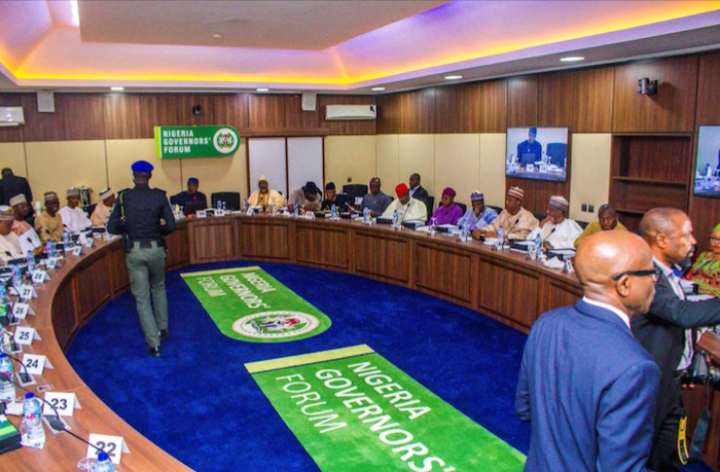

The Nigeria Governors’ Forum (NGF) and the National Sugar Development Council (NSDC) have formalized cooperation aimed at intensifying the development of Nigeria’s sugar industry. This partnership shifts strategic responsibility for sugar industry expansion to state governments while aligning public and private investment priorities with national economic goals.
The NGF agreed to position sugar as a priority industrial product in development planning across member states. This reflects a calculated response to Nigeria’s historically large sugar import bill and the corresponding loss of foreign exchange reserves.
The agreement was reached following a structured request by the NSDC. The council is the federal agency tasked with managing and regulating the sugar sub-sector and implementing the National Sugar Master Plan to achieve self-sufficiency.
The NGF will support the preparation of investor-ready sugar projects. Government officials will work with investors and industry operators to coordinate land access, infrastructure provision, and the establishment of effective incentive frameworks.
The arrangement requires state governments to integrate sugar projects into their broader development strategies. It intentionally distributes roles across governance levels to improve project execution capacity, reduce bureaucratic bottlenecks, and strengthen accountability.
NSDC Chief Executive Kamar Bakrin presented the sector’s investment opportunities to NGF officials. He identified specific states with viable land suitable for large-scale sugarcane cultivation.
Bakrin highlighted that macroeconomic dynamics have enhanced the competitiveness of local sugar production. He noted that while global sugar prices remain relatively stable, “exchange rate movements have made imports significantly more expensive, thereby enhancing the commercial viability of domestically produced sugar, whose inputs are largely naira-denominated.”
The domestic sugar value chain benefits from substantial natural advantages. Nigeria has broad tracts of suitable land and water resources, and available labour, essential components for efficient sugarcane cultivation and processing.
Bakrin also noted the significant economic potential embedded in the sector. He stated that “the Nigerian sugar industry is now worth $2bn, and with the aid of the African Continental Free Trade Agreement, it is worth $7bn across the continent. The market for sugar by-products alone is worth $10bn in Nigeria.”
The partnership directs effort toward reversing Nigeria’s reliance on imported refined and raw sugar. Domestic production has lagged behind consumption, with the country importing most of its sugar requirements for years.
NSDC’s recent strategic moves include signing agreements with multiple operators to develop greenfield sugar projects that add production capacity. These projects are designed to reduce import dependency and capture greater value within the domestic economy.
Bakrin has argued that structural changes in global commodity markets have enhanced the commercial viability of local production. He said that full exploitation of Nigeria’s agricultural potential could be achieved at a pace not previously possible.
“Under this arrangement, the NGF secretariat will also include sugar projects as priority beneficiaries in its engagements with development partners,” Bakrin said, emphasizing the need for effective alignment among federal, state, and private partners to mobilize investment and scale capacity.
The collaboration underscores a broader policy focus on agricultural industrialization and import substitution, consistent with national economic objectives. State-led development of sugar infrastructure is expected to generate jobs, stimulate rural economies, and build processing capacity across value chains.
By structuring state participation, the partnership also aims to strengthen governance in project execution. State government engagement is expected to improve the planning and deployment of critical infrastructure and ensure land resources are efficiently earmarked for sugarcane production.
The NGF-NSDC partnership thus represents a strategic pivot in Nigeria’s industrial policy: the deliberate devolution of responsibility for sugar industry expansion to state actors backed by federal policy support and calibrated investment incentives