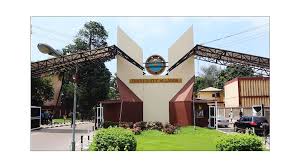

The Academic Staff Union of Universities (ASUU), University of Lagos (UNILAG) branch, has declared an indefinite strike action effective Wednesday, March 11, 2026. The resolution follows an emergency congress held on Tuesday at the institution’s Akoka campus, where members expressed grievances over what they termed “amputated salaries” and the non-payment of various earned allowances. The union has directed all academic staff to withdraw their services immediately, a move that effectively halts teaching, research, and administrative activities across the university’s campuses in Akoka and Idi-Araba.
According to a formal statement issued by the branch following the deliberations, the university administration allegedly implemented discriminatory salary payments for the months of January and February 2026. The union noted that while other federal institutions of similar status received full remunerations, UNILAG staff were subjected to significant deductions. Furthermore, the congress highlighted the total non-payment of Earned Academic Allowances (EAA) at the Akoka campus, while staff at the College of Medicine in Idi-Araba reported the withholding of both EAA and Clinical Academic Transitional Allowances (CATA).
The economic implications of this industrial action are multifaceted, particularly concerning the stability of the nation’s human capital development. The University of Lagos is a primary hub for tertiary education in Nigeria, and a prolonged shutdown threatens to disrupt the academic calendar for thousands of students. From a broader perspective, recurring strikes in the federal university system continue to undermine the productivity of the education sector, which is a critical component of the services sector in Nigeria’s Gross Domestic Product (GDP). Such disruptions often lead to an “educational brain drain,” where students and faculty seek more stable environments in private institutions or abroad, further straining Nigeria’s foreign exchange reserves through increased demand for foreign education.
In its resolution, the UNILAG-ASUU congress condemned the university administration’s fiscal conduct, describing the recent payroll adjustments as a violation of basic labor decency. The union argued that the unilateral nature of the deductions portrays a lack of institutional empathy for the plight of lecturers navigating a high-inflation environment. Nigeria’s headline inflation rate has remained a significant concern for households, and the union maintains that reducing the take-home pay of academic staff at this time imposes an unsustainable financial burden on its members. The strike, they assert, is a measure of last resort to compel the institution to rectify these payment discrepancies.
The fiscal management of federal universities has been a point of contention between academic unions and government-appointed administrators for years. The current dispute at UNILAG underscores the ongoing challenges related to the Integrated Payroll and Personnel Information System (IPPIS) and other centralized payment platforms used by the Federal Government. While these systems were designed to eliminate ghost workers and enhance transparency, ASUU has consistently argued that they fail to account for the peculiarities of the university system, often resulting in the very “amputated salaries” currently being protested.
The industrial action also carries significant social and security risks. Historically, prolonged university closures have been linked to increased vulnerabilities for the youth population, potentially leading to social unrest or a rise in petty crime within host communities. For the business ecosystem surrounding the Akoka and Yaba areas—ranging from transportation providers to small-scale retailers and student housing providers the absence of students represents a direct loss of daily revenue, further dampening local economic activity in Lagos State.
As the strike commences, the union has vowed that there will be no retreat until the university administration pays the January and February 2026 salaries in full. The leadership of the branch emphasized that this action is in alignment with previous National Executive Council (NEC) resolutions regarding the welfare of academic staff. The deadlock puts the university management under intense pressure to reconcile its accounts and explain the specific administrative or fiscal bottlenecks that led to the disputed deductions.
Looking ahead, the resolution of this crisis will depend on the speed of negotiations between the ASUU leadership and the UNILAG Vice-Chancellor’s office. Observers of the Nigerian labor market suggest that the Federal Ministry of Education and the Budget Office of the Federation may need to intervene to ensure that the institution is properly funded to meet its personnel obligations. Until a verifiable commitment to pay the arrears is established, the gates of one of Nigeria’s most prestigious universities will remain closed, extending the period of academic and economic uncertainty for all stakeholders involved.