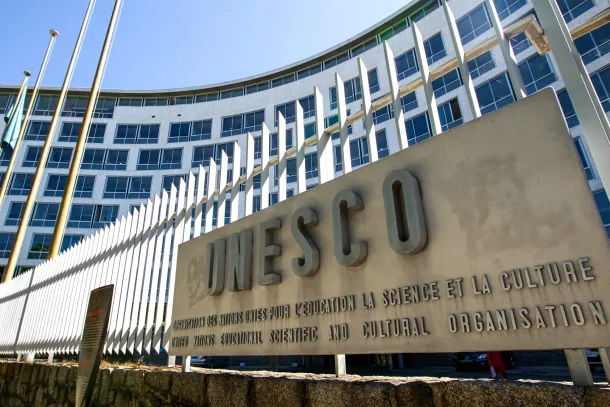

The number of children and young people excluded from education worldwide has risen to 273 million, marking the seventh consecutive year of increase, according to the United Nations Educational, Scientific and Cultural Organisation (UNESCO).
In its 2026 Global Education Monitoring (GEM) Report, UNESCO said the trend reflects a deepening global education crisis, with one in six school-age children now out of school and only about two in three completing secondary education.
The report said progress in expanding access to education has slowed in most parts of the world since 2015, with conflict and rapid population growth identified as major factors driving the setback.
“Progress in keeping children in school has slowed across almost every region,” the report stated, noting that sub-Saharan Africa remains one of the hardest-hit regions.
UNESCO said the picture is even worse in conflict-affected areas, where the actual number of children out of school is believed to be far higher than official statistics suggest. Displacement, insecurity, damaged school infrastructure and weakened public systems continue to push millions of children out of classrooms.
Despite the worsening global figures, the agency said there have been important gains over the past two decades. Since 2000, global school enrolment has increased significantly, with more than 25 additional children gaining access to school every minute.
The report also highlighted that some countries have made strong progress by reducing out-of-school rates and widening access across primary and secondary education levels. These improvements, UNESCO said, show that meaningful gains are possible when governments back inclusive policies with sustained funding and implementation.
Still, the organisation warned that no single solution can address the scale of exclusion worldwide. Instead, it called for country-specific strategies and long-term investment to tackle the structural barriers that keep children and young people out of school.
UNESCO stressed that ensuring universal access to education will require targeted interventions, especially in fragile and fast-growing regions, as well as stronger efforts to support vulnerable children who are most at risk of being left behind.