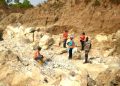
The Defence Headquarters (DHQ) has reported significant successes in the fight against economic sabotage, confirming that troops of Operation DELTA SAFE destroyed 101 illegal refining sites and arrested 219 suspects during the first quarter of 2026. Speaking at a quarterly media briefing in Abuja on Tuesday, March 31, 2026, the Director of Defence Media Operations, Maj.-Gen. Michael Onoja, detailed the military’s intensified campaign to secure Nigeria’s oil infrastructure.
The structural and security consequence of these operations has led to the recovery of over 547,920 litres of stolen petroleum products. This haul includes a mixture of crude oil, automotive gas oil (diesel), kerosene, and premium motor spirit (petrol). In a specific breakthrough in March, troops intercepted 193,570 litres of refined products and 45,000 litres of stolen crude in Rivers State alone, marking a major blow to the logistics chains of oil theft syndicates.
Analytically, the impact on “Multidimensional Criminal Networks” shows that the military is moving beyond pipeline protection to broader regional security. Beyond oil theft, troops neutralized suspected kidnappers and rescued several victims across Rivers and Imo states. In Edo State, joint operations with the National Drug Law Enforcement Agency (NDLEA) resulted in the arrest of narcotics suspects, illustrating a coordinated effort to dismantle the overlapping networks of drugs, arms, and illegal refining.
The impact on “Counter-Sabotage and Infrastructure Protection” was further highlighted by a thwarted attack in Akwa Ibom. Troops uncovered a sabotage attempt at a critical wellhead where active explosives had been planted; military engineers successfully neutralized the devices before they could be detonated. Maj.-Gen. Onoja noted that these proactive measures have “significantly degraded” the operational capacity of criminal groups that previously operated with relative impunity in the Niger Delta.
Furthermore, the DHQ reaffirmed the commitment of the Armed Forces to sustaining this offensive. By targeting both the physical refining sites and the personnel managing them, the military aims to make economic sabotage a high-risk, low-reward venture. The integration of intelligence-led raids and inter-agency cooperation is now a central pillar of the strategy to protect the nation’s primary revenue source.
The long-term outlook for the South-South region depends on the military’s ability to maintain this high tempo of operations throughout 2026. While the destruction of 101 sites is a milestone, the persistence of these “artisanal” refineries suggests that continuous surveillance and community engagement will be required to prevent the resurgence of illegal activities in the creeks of the Niger Delta.