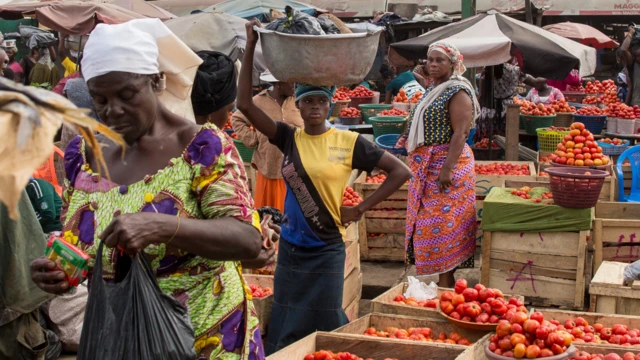

The killing of seven Ghanaian tomato traders in northern Burkina Faso by Islamist insurgents marks a devastating escalation in the security risks facing West African cross-border trade. The group of 18 traders was targeted in the town of Titao while attempting to procure produce for the Ghanaian market, an essential supply chain for regional food security. For the broader West African economy, this tragedy underscores the “insecurity tax” that continues to stifle the African Continental Free Trade Area (AfCFTA) aspirations, as violent extremism in the Sahel disrupts vital trade corridors and threatens the livelihoods of thousands of small-scale entrepreneurs who form the backbone of regional commerce.
The economic impact of such attacks is felt most acutely in the agricultural value chain. Ghana relies heavily on tomato imports from Burkina Faso to meet domestic demand, particularly during the dry season. The brutal targeting of traders and the destruction of their logistics assets—including the burning of transport trucks—will likely lead to a contraction in supply and a corresponding spike in retail prices in Ghanaian markets. From a fiscal perspective, the persistent instability in Burkina Faso necessitates increased government spending on border security and intelligence by neighboring states like Ghana and Nigeria, diverting capital from essential social infrastructure and industrial development.
From a business journalism perspective, the Titao attack highlights a significant failure in regional protective infrastructure for merchant convoys. The inability of Ghanaian officials to even reach the site of the killings due to security concerns illustrates the severe “operational vacuum” that currently exists in the Sahel. For institutional investors and regional banks, these incidents increase the “risk premium” associated with cross-border financing. If traders can no longer move goods safely across borders without military escorts, the cost of doing business will continue to rise, potentially leading to a “de-risking” shift where formal commercial entities withdraw from these high-potential but volatile markets.
Furthermore, the expansion of militant groups linked to al-Qaeda and the Islamic State across the Sahel represents a systemic threat to the regional digital and logistical integration goals. As these groups target essential infrastructure and trade hubs, they undermine the “Digital Africa” initiatives that rely on stable connectivity and physical security. For Nigeria, the neighboring instability serves as a stern warning: the “spillover effect” of Sahelian conflict can disrupt the ECOWAS trade protocols, leading to a fragmented economic landscape where national interests are prioritized over regional cooperation. Strengthening the joint security architecture of West African states is not merely a military necessity but a foundational requirement for sustainable economic growth.
The long-term outlook for Sahelian trade depends on the ability of regional governments to move beyond reactive security measures toward proactive economic stabilization. The loss of seven lives in Titao is a stark reminder that without a secure trade environment, the promises of the AfCFTA will remain elusive for the continent’s most industrious citizens. As Ghana’s Interior Minister, Mohammed Mubarak Muntaka, handles the diplomatic and humanitarian fallout, the broader economic community must advocate for a more resilient regional framework that protects the vital arteries of African commerce. Ensuring that merchants can cross borders without fear of violence is the first step toward building a prosperous and integrated African future.