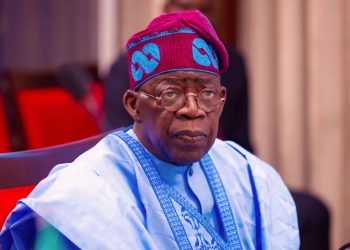
Central African Republic (CAR) President Faustin-Archange Touadera has secured a third term in office after winning an outright majority in the 28 December presidential election, according to provisional results released by the country’s electoral commission on Monday.
Touadera, 68, who has been in power since 2016, won 76.15% of the vote, the head of the National Election Authority, Mathias Morouba, announced. Former prime minister Anicet-Georges Dologuele came a distant second with 14.66%, while another former premier, Henri-Marie Dondra, secured 3.19%. Voter turnout was reported at 52.42%.
The election follows a controversial constitutional referendum in 2023 that removed presidential term limits, clearing the way for Touadera to seek another mandate. The move drew sharp criticism from opposition groups and civil society organisations, who argued that it weakened democratic checks and balances in a country with a long history of political instability and contested governance.
Touadera’s campaign was built around claims of improved security and relative stability after years of civil conflict. Since taking office, he has increasingly relied on the support of Russian mercenaries, widely reported to be linked to the Wagner Group, and Rwandan troops to bolster the national army and push back armed rebel groups. The government has also pointed to a series of peace deals and localised ceasefires as evidence that its security strategy is delivering results.
While violence has not been eliminated, large parts of the country that were previously inaccessible have seen a reduction in major clashes, allowing for limited economic activity to resume. Roads linking Bangui to some regional centres have reopened intermittently, and artisanal mining, agriculture and trade have picked up in certain areas, according to local analysts.
However, the election was overshadowed by a boycott from the main opposition coalition, which argued that the process lacked credibility and fairness. Opposition leaders alleged widespread irregularities, including voter intimidation and manipulation of electoral institutions, and said participation would only legitimise what they described as a predetermined outcome. The government has rejected these claims, insisting that the vote was conducted in line with the law and that international and domestic observers were present.
Final election results are expected to be announced by 20 January, though Touadera’s decisive margin makes a reversal highly unlikely.
The outcome has significant political and economic implications for the Central African Republic, one of the world’s poorest and most aid-dependent countries. Touadera’s continued grip on power is likely to reinforce the current policy direction, particularly the deepening of security and economic ties with Russia. In recent years, CAR has granted mining and logging concessions to companies linked to Russian interests, raising questions about transparency, revenue management and long-term national benefit.
Supporters of the president argue that these partnerships have provided critical security assistance at a time when Western engagement has waned and regional security mechanisms have struggled. Critics, however, warn that reliance on foreign mercenaries and opaque commercial arrangements risks entrenching patronage networks and limiting the state’s ability to build accountable institutions.
Economically, CAR remains heavily constrained by insecurity, weak infrastructure and limited state capacity. Despite vast natural resources—including gold, diamonds and timber—government revenues are low, and much of the population relies on subsistence agriculture. Any gains from improved security have yet to translate into broad-based economic growth, with inflation, unemployment and poverty remaining acute challenges.
International partners are likely to watch closely how Touadera uses his renewed mandate. Sustained stability could create space for reforms aimed at improving public finance management, attracting investment and rebuilding basic services. Conversely, continued political exclusion and allegations of democratic backsliding may complicate relations with donors and multilateral institutions, on which CAR depends for budget support and humanitarian assistance.
Regionally, Touadera’s re-election reinforces a broader trend in parts of Africa where incumbents have extended their rule through constitutional changes, often justified on the grounds of stability and security. In CAR’s case, the argument resonates with a population weary of conflict, but it also raises concerns about the long-term prospects for democratic consolidation.
As the country awaits the final certification of results, Touadera faces the challenge of translating electoral victory into tangible improvements in living standards. Whether his third term delivers lasting peace and economic recovery, or further entrenches a highly centralised system of power, will shape the Central African Republic’s trajectory for years to come.