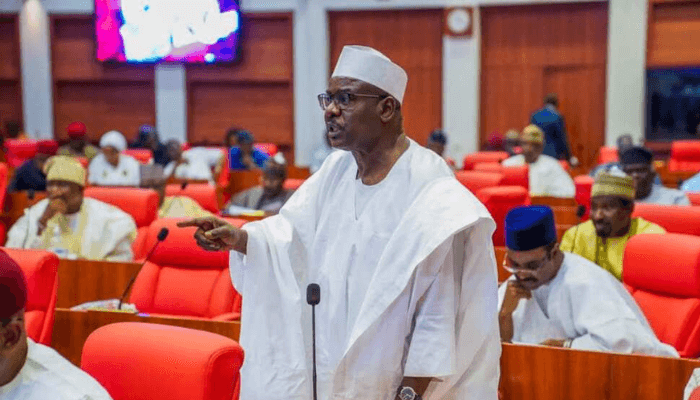

Senator Ali Ndume, representing Borno South Senatorial District, has formally called upon President Bola Ahmed Tinubu to authorize an intensified and more coordinated military offensive against insurgent strongholds in Nigeria’s North-East. The lawmaker’s appeal emphasizes the necessity of simultaneous clearance operations across three strategic areas: the Lake Chad fringes, the Sambisa Forest, and the Mandara Mountains. According to Ndume, these locations remain the primary operational hubs for Boko Haram and other extremist factions, serving as bases from which they launch attacks on civilian populations and security forces.
The call for renewed military vigor comes amid reports of insurgent regrouping in difficult terrains and border regions. Ndume noted that while the Nigerian Armed Forces have recorded significant successes in previous years, the lack of a sustained and simultaneous “total clearance” has allowed militants to reclaim territory and disrupt humanitarian and economic activities. He argued that dismantling these specific enclaves is the only viable path toward ending the cycle of violence that has plagued the region for over a decade.
Strategic military analysis highlights the geographical complexity of the areas mentioned by the senator. The Mandara Mountains, located along the border between Nigeria and Cameroon, provide high-altitude natural cover and rugged terrain that complicates traditional ground maneuvers. Similarly, the Sambisa Forest—once a colonial forest reserve covering approximately 60,000 square kilometers remains a dense hideout for insurgent logistical hubs. Ndume stressed that the military must prioritize these zones to disrupt the supply routes and communications networks used by the fighters.
The lawmaker also pointed to the importance of the Lake Chad Basin, a vast area spanning the borders of Nigeria, Niger, Chad, and Cameroon. The region’s intricate waterways and remote islands have historically been exploited by militants to evade surveillance and move equipment across international boundaries. Consequently, Ndume advocated for enhanced regional collaboration within the framework of the Multinational Joint Task Force (MNJTF). He noted that without a synchronized effort involving neighboring countries, insurgents would continue to exploit porous borders to escape during Nigerian military offensives.
A central component of the senator’s recommendation involves the provision of superior logistics and modern hardware for the troops. He urged the Federal Government to ensure that soldiers deployed to these high-risk areas receive adequate intelligence support and equipment tailored for rugged terrain. Beyond hardware, Ndume emphasized the role of troop welfare, stating that improved conditions and consistent administrative support are essential for maintaining high morale during prolonged counter-insurgency campaigns.
The security situation in the North-East remains a critical factor in the Federal Government’s plan for the resettlement of Internally Displaced Persons (IDPs). The senator warned that the continued presence of militants in the Mandara Mountains and the Lake Chad islands poses a direct threat to the safety of returning communities. Many farmers and traders remain unable to access their ancestral lands or local markets due to the fear of ambush or abduction, which further stifles the economic recovery of Borno State and the wider region.
Security analysts have echoed the senator’s concerns, noting that “clearance” must be followed by “stabilization” a phase where civil authority and police presence are restored to prevented the vacuum that allows insurgents to return. Ndume’s appeal suggests that a purely defensive posture is no longer sufficient; instead, he advocates for a proactive doctrine that seeks to eliminate the insurgents’ ability to hide and regroup in these traditional safe havens.
As the Federal Government continues to review its national security strategy, the focus on these three geographic pillars Sambisa, Mandara, and Lake Chad is expected to remain a priority. The senator expressed confidence that with sustained political will from the Presidency and the necessary tactical support for the military, the operational capacity of insurgent networks can be permanently degraded. Decisive action in these areas is viewed as the prerequisite for restoring lasting peace and ensuring the safety of millions of Nigerians residing in the North-East.