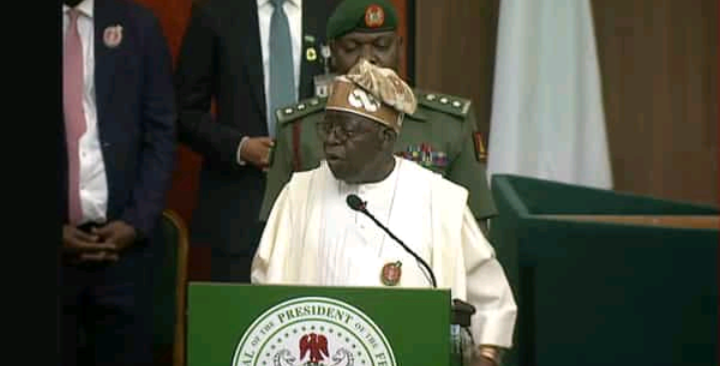

On Friday, 19 December 2025, President Bola Ahmed Tinubu, GCFR appeared before a joint session of the National Assembly in Abuja to present the 2026 Appropriation Bill, marking another major moment in Nigeria’s evolving economic trajectory.
The 2026 budget is officially titled the “Budget of Consolidation, Renewed Resilience and Shared Prosperity.” Tinubu explained that this Budget reflects the government’s commitment to strengthening Nigeria’s economy, building on reforms implemented over the past two and a half years.
He stated that these reforms were necessary to confront structural weaknesses, stabilise the economy, rebuild confidence, and lay a solid foundation for long‑term growth. He acknowledged that while reforms brought challenges for families and businesses, “their sacrifices are not in vain,” and that the path of reform, though difficult, is essential for lasting stability and shared prosperity.
Key Budget Features and Government Focus
The total 2026 budget proposal stands at around ₦58.18 trillion to ₦58.47 trillion. Within this framework:
Projected total revenue is approximately ₦34.33 trillion.
Expenditure totals roughly ₦58.18–₦58.47 trillion, reflecting ambitions to expand public investment.
Deficit financing will be significant, with the gap between revenue and spending projected at about 4.28% of GDP.
The government emphasised macroeconomic stability, competitiveness and inclusiveness, with spending allocations intended to translate into decent jobs, improved incomes, and better living standards nationwide.
Sector Highlights
In outlining priorities, President Tinubu and his team highlighted several major spending areas:
Debt servicing remains a large part of the budget, with around ₦15.52 trillion allocated.
Capital expenditure (investment in infrastructure and growth projects) is set at approximately ₦26.08 trillion.
Key sectors such as security, health, education, and infrastructure received significant attention in allocations.
In his remarks, the president reiterated that security is a foundation for development and that enhanced spending would support efforts to stabilise communities.
Education and health also featured prominently, with earmarked funds aimed at improving human capital outcomes.
The budget assumes important macroeconomic variables like oil price benchmarks and production levels, recognising the ongoing role of oil in Nigeria’s export earnings and fiscal capacity.
Context and Government Rationale
President Tinubu argued that the Budget reflects not just numbers, but national priorities aimed at delivering tangible improvements in livelihoods. He stated, “The greatest budget is not the one we announce. It is the one we deliver.”
The Budget was presented after the joint approval of the Medium‑Term Expenditure Framework (MTEF) and Fiscal Strategy Paper (FSP) by both chambers of the National Assembly, a step necessary to ensure the budget has a sound macroeconomic and fiscal foundation.
Challenges and Promises
While 2026’s spending plan aims for sustainable growth, Nigeria faces ongoing economic pressures including inflationary dynamics, fiscal deficits, and the need to balance investment with debt obligations. Despite these challenges, the president stressed the importance of continued cooperation between the executive and the legislature to implement the Budget effectively.
Nigeria’s 2026 budget projects a 4.28% GDP deficit and aims to bolster growth through increased capital spending, with assumptions of stable oil production and improved revenue mobilisation. The fiscal strategy reflects efforts to balance macroeconomic stability with developmental needs amid global pressures and domestic inflation moderation.