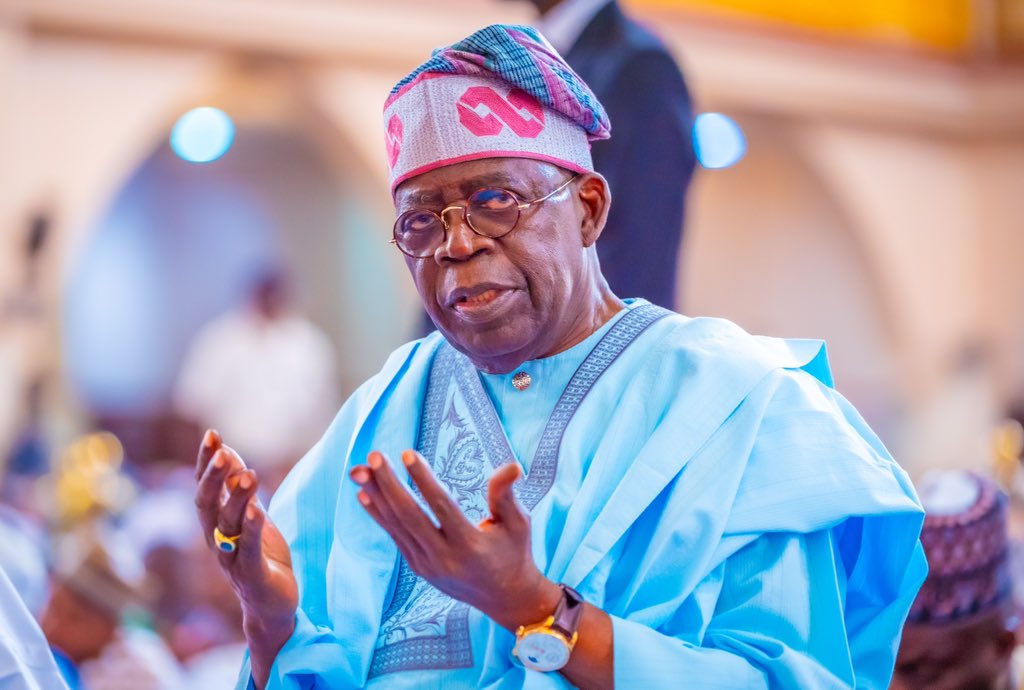

President Bola Tinubu has asked the House of Representatives to approve a proposed N10.79 trillion external borrowing plan included in Nigeria’s 2026 budget.
The request is intended to provide part of the funding needed to cover the country’s budget deficit and finance capital projects across critical sectors of the economy. Tinubu’s request was conveyed in a letter addressed to the lawmakers and read during plenary by the Speaker of the House, Tajudeen Abbas.
In the letter, the President explained that the proposed external borrowing would support the implementation of projects captured in the 2026 Appropriation Act while helping to sustain the economic improvements recorded by his administration. The proposed N10.79 trillion borrowing represents Nigeria’s external financing requirement under the 2026 budget.
According to the President, the 2026 Appropriation Act provides for total new borrowings of N29.2 trillion to finance an estimated budget deficit of N31.4 trillion. The borrowing requirement consists of N18.4 trillion in domestic loans and N10.79 trillion from external sources. The external component is estimated at $7.70 billion, based on the budget exchange rate of N1,400 to the dollar.
Tinubu explained that the government plans to obtain the funds through different financing arrangements, including Eurobond issuance, concessional and commercial loans from multilateral and bilateral development institutions, as well as facilities from the International Monetary Fund (IMF).
Other proposed sources include bridge financing, syndicated loans and direct borrowing from international financial institutions. The President said the government would give priority to Eurobond issuance because the process is generally faster to complete. However, he noted that the administration would explore several financing options simultaneously, considering their costs, benefits and the time required to secure the funds. The government plans to channel the proceeds into major capital projects across infrastructure, defence and security, agriculture, healthcare, power, transportation and education.
These sectors are expected to receive funding to support projects already outlined in the 2026 budget. Tinubu also requested authorisation for the Minister of Finance and Coordinating Minister of the Economy, working with the Debt Management Office (DMO), to take the necessary steps to execute the borrowing arrangement once the lawmakers grant approval.
He urged the House to consider the request promptly, saying approval would allow the executive to proceed with planned capital expenditure and infrastructure development programmes.
Following the presentation of the letter, the Speaker referred the request to the joint committees on Aids, Loans and Debt Management, and Finance for further legislative consideration. The committees are expected to examine the proposal before it proceeds through the necessary legislative process.
The latest request comes as the Federal Government continues to pursue external financing to support its budget and development plans. In July 2025, the Senate approved a $21.5 billion external borrowing plan presented by Tinubu for the 2025 and 2026 fiscal periods. The approval followed the presentation of a report by the Senate Committee on Local and Foreign Debts, chaired by Senator Aliyu Wamakko. The lawmakers also approved a separate loan request of 15 billion Japanese yen and a grant of 65 million euros.
Additionally, the Senate authorised the issuance of a N757 billion Federal Government bond to settle outstanding pension rights under the Contributory Pension Scheme as of December 2023. The latest N10.79 trillion request will now undergo further consideration by the House of Representatives as the government seeks additional financing for its 2026 fiscal commitments.