
President Bola Tinubu’s declaration on May 29, 2023, that “fuel subsidy is gone” marked one of Nigeria’s most significant economic policy shifts in decades. More than three years later, the reform has reshaped public finances, transformed the downstream petroleum market and intensified the cost-of-living pressures facing households and businesses.
Before the policy change, Nigeria spent trillions of naira annually subsidising Premium Motor Spirit (PMS). NNPC Limited reported subsidy-related expenses of ₦4.39 trillion in 2022, while the World Bank repeatedly warned that the subsidy imposed a heavy fiscal burden, encouraged fuel smuggling, distorted market pricing and discouraged private investment in refining and fuel distribution.
The removal of the subsidy, alongside foreign exchange reforms, ushered in a fully deregulated petrol market. According to the Nigerian Midstream and Downstream Petroleum Regulatory Authority (NMDPRA), marketers are expected to source products commercially and retail prices are largely determined by market forces, including crude oil prices, exchange rates and distribution costs.
The deregulated market has also accelerated the role of domestic refining. Data from the NMDPRA show that the Dangote Petroleum Refinery supplied about 41.5 million litres of petrol daily in May 2026, accounting for roughly 87.5% of domestic supply. However, imports rebounded in June 2026 as domestic supply declined, highlighting that Nigeria continues to rely on imported petrol to supplement local production.
The fiscal impact has been significant. The World Bank estimates that subsidy removal generated savings equivalent to about 2.6% of Nigeria’s GDP in 2024. However, the Bank also noted that not all of those gains immediately accrued to the Federation Account, as NNPC used part of the proceeds to settle outstanding financial obligations. Analysts say the reform has strengthened public finances but caution that Nigeria’s broader fiscal challenges, including high debt-service costs and infrastructure financing needs remain.
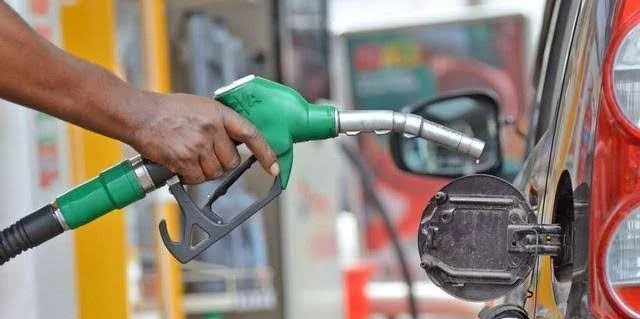
For consumers, however, the transition has been costly. Petrol prices rose sharply after deregulation, increasing transport and logistics costs across the economy. According to the National Bureau of Statistics, the average retail price of petrol reached ₦1,596.25 per litre in May 2026, contributing to higher food prices and persistent inflation that has weakened household purchasing power.
To cushion the impact, the Federal Government launched the Presidential Compressed Natural Gas Initiative (PCNGi) to promote compressed natural gas as a lower-cost transport fuel and later expanded its clean mobility programme to include electric vehicles. The government says wider adoption of alternative fuels will help reduce transport costs and lessen dependence on petrol over time.
The International Monetary Fund and the World Bank have broadly supported the subsidy removal as a key structural reform capable of improving fiscal sustainability. Its long-term success, however, will depend on maintaining market transparency, strengthening social safety nets and ensuring that fiscal savings are invested in infrastructure, healthcare, education and other public services that support inclusive economic growth.