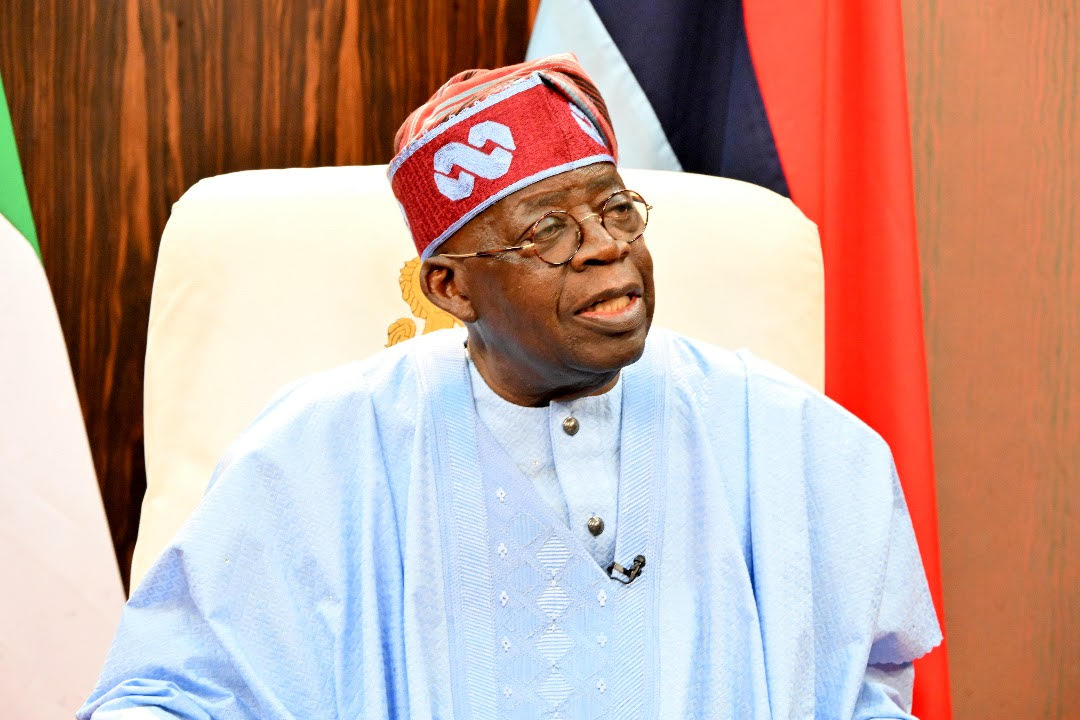

Nigerian President Bola Ahmed Tinubu on Wednesday announced a sweeping national security emergency, unveiling one of the most expansive internal security overhauls in years as armed violence continues to spread across several regions of the country. The television address marked a decisive political moment for an administration under pressure to halt a worsening cycle of rural banditry, insurgent attacks, communal clashes and kidnapping-for-ransom that has destabilised communities and disrupted local economies.
Tinubu said the Federal Government would immediately expand the Nigeria Police Force by recruiting 20,000 additional officers, bringing the number of available frontline personnel to about 50,000. The new officers are expected to be trained using National Youth Service Corps orientation camps, which will temporarily serve as fast-tracked training centres. Tinubu also ordered the withdrawal of police officers from VIP protection duties so they can be redeployed to high-risk areas, a move aimed at boosting operational capacity in frontline communities that have long complained of being under-policed.
The president’s emergency declaration comes after a series of deadly attacks in Kebbi, Borno, Zamfara, Niger, Yobe and Kwara states, where armed groups have continued to raid villages, destroy farmland and abduct civilians. These incidents have fuelled widespread fear and weakened economic activity in regions already battling food insecurity, inflation and restricted market access. Many rural households have abandoned farms, cut back on trading activities or fled entirely, compounding Nigeria’s fragile food supply outlook and placing additional pressure on national inflation, which has remained high partly due to disruptions in agricultural production.
Tinubu said the Department of State Services would deploy trained forest guards to track and dismantle armed groups operating from forest enclaves, which have served as safe havens for criminal networks in parts of the northwest, north central and northeast. He also instructed the agency to begin new recruitment to strengthen intelligence-gathering capabilities, an area security analysts have long described as overstretched.
The security overhaul is expected to carry significant fiscal and economic implications. Increasing police personnel on this scale will require new budgetary allocations for training, equipment, welfare, and long-term salary obligations. Analysts note that while Nigeria must confront its security challenges head-on, a substantial rise in security spending could further strain public finances at a time when the government is already grappling with high debt servicing costs, revenue mobilisation challenges, and the economic fallout of subsidy reforms. However, government officials have repeatedly argued that the cost of insecurity to GDP growth, investor confidence, food supply chains and local government revenues far outweighs the cost of a rapid security scale-up.
In his address, Tinubu praised recent rescue operations conducted by security forces, saying they offered proof that coordinated action could yield results. He also urged the National Assembly to accelerate debates on state police, an issue that has gained momentum as state governors demand more autonomy to tackle localised security problems. Proponents say state-controlled policing could enhance responsiveness, though critics warn of the risk of political misuse by state-level authorities.
Tinubu also appealed to religious institutions to reinforce security around places of worship following an uptick in attacks on churches and mosques in several northern communities. He extended a similar call to traditional rulers and local leaders, urging them to work more closely with security agencies to identify suspicious activity and mediate communal disputes before they escalate.
In a move aimed at addressing one of the root causes of recurring clashes between herders and farming communities, the president called on herder groups to embrace ranching as a sustainable alternative to open grazing. He encouraged herders to surrender illegal weapons and cooperate with authorities to reduce tensions in agrarian regions where violence has disrupted harvests, displaced thousands of people and forced many states to allocate relief funds that strain already tight budgets.
Wednesday’s announcement underscores the scale of Nigeria’s security challenge and the government’s attempt to demonstrate urgency as violence threatens regional stability and economic recovery efforts. With inflation still elevated and growth projections subdued by global uncertainty and domestic constraints, the administration is betting that improved security conditions will help restore investor confidence, support agricultural production and enable communities to resume normal economic activity.
The coming months will test the government’s ability to translate the emergency declaration into visible improvements on the ground. For many Nigerians, especially those in conflict-affected rural areas, the success of the new measures will be judged not by policy statements but by whether farmers can return to their fields, markets can operate without fear, and families can travel without the constant risk of abduction or attack.