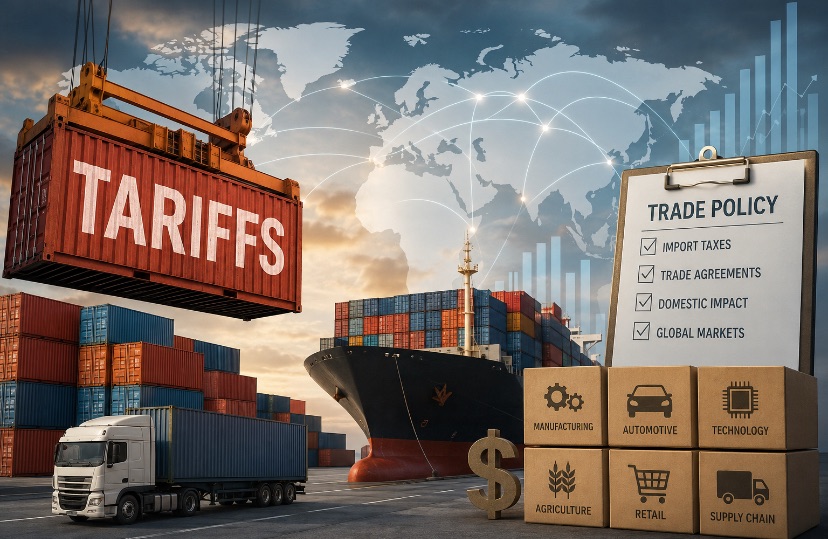

Trade policies and tariffs are once again becoming a major topic for businesses around the world. As governments introduce new import taxes and update trade rules, many industries are feeling the impact. From manufacturing and technology to farming and the automotive sector, companies are changing their strategies to deal with higher costs and shifting global markets.
Tariffs are taxes placed on imported goods. Governments often use them to protect local industries, encourage domestic production, or respond to trade disagreements with other countries. While tariffs can support local manufacturers, they also increase the cost of imported products and raw materials.
The manufacturing industry is one of the sectors most affected by changing trade policies. Many factories depend on imported metals, machinery, and electronic parts. When tariffs increase the price of these materials, production costs also rise. Some companies pass these extra costs on to customers by raising prices, while others look for new suppliers in countries with fewer trade restrictions.
The automotive industry is also experiencing challenges. Modern vehicles are built using thousands of components that often come from different countries. Higher tariffs on steel, aluminum, semiconductors, and vehicle parts can make production more expensive. Some automakers are considering expanding local production to reduce their dependence on imported materials, while others are reviewing their supply chains to avoid unnecessary costs.
Technology companies are facing similar issues. Electronics manufacturers rely heavily on international supply networks for computer chips, batteries, and specialized equipment. Increased trade barriers can delay shipments and raise production expenses. As a result, several businesses are investing in regional manufacturing facilities and exploring partnerships with suppliers located closer to their main markets.
Farmers and agricultural businesses are another group affected by trade policy changes. When countries impose tariffs on food products, exports may become more expensive for overseas buyers. This can reduce demand for crops, meat, and dairy products. At the same time, local producers may benefit if imported food becomes more costly, giving domestic products a stronger position in the market.
Retail businesses are also monitoring the situation closely. Stores that import clothing, electronics, furniture, and household goods may face higher purchasing costs. If tariffs remain in place for an extended period, shoppers could notice gradual price increases on a wide range of products.
Trade experts say businesses are becoming more flexible in response to these challenges. Many companies are diversifying their supply chains instead of relying on a single country for materials. Others are increasing investments in automation and local manufacturing to reduce exposure to future trade disruptions.
Economists note that while tariffs can strengthen certain domestic industries, they may also increase costs for businesses and consumers. The overall impact often depends on how long the tariffs remain in place and how companies adapt to the changing trade environment.
As global trade policies continue to evolve, industries are expected to keep adjusting their operations. Businesses that successfully manage supply chains, control costs, and respond quickly to policy changes are likely to remain competitive despite ongoing uncertainty. The coming months will be closely watched by manufacturers, exporters, retailers, and investors as governments continue to shape international trade through new tariff decisions.