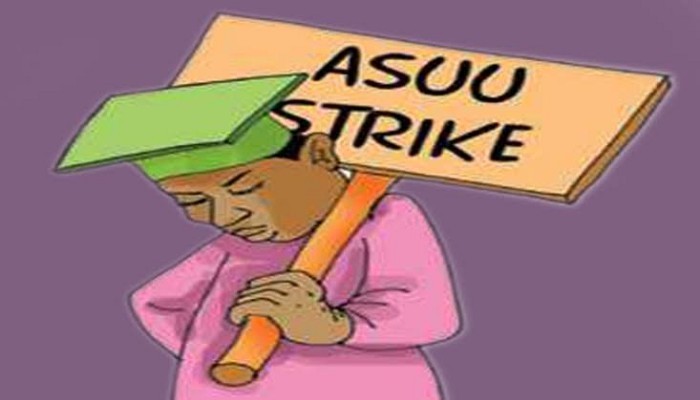

From the ivory towers of academia to the corridors of national power, the withdrawal of labour has become a recurring feature of Nigeria’s socio-political landscape. Despite being constitutionally protected as a last resort, industrial action increasingly appears to be the only language capable of compelling government attention. This trend raises a fundamental question: have strikes effectively eclipsed the traditional pathways of dialogue, collective bargaining, and systematic dispute resolution? As the nation heads towards another round of potential work stoppages in 2026, the economic and social costs of this reliance on protest are becoming too heavy to ignore.
Historical Legacy and the Breakdown of Trust
The Nigerian labour movement has historically been a potent force for change. The 1945 General Strike, which lasted 44 days, was a seminal event that transformed the push for national independence into a mass‑based movement. That watershed moment demonstrated the power of collective action. However, the post‑independence era has seen a marked shift in the nature of these actions. What was once a strategic tool for anti‑colonial struggle has become a near‑default response to governance failures.
The root cause is a profound breakdown of collective bargaining. The government’s consistent failure to honour signed agreements and memoranda of understanding has eroded trust, leaving labour unions feeling that strike action is the only reliable instrument for enforcement. Dr. Emmanuel Osodeke, President of the Academic Staff Union of Universities (ASUU), captured this sentiment at an April 17 press conference, stating, “Industrial action is a last resort, but it remains the only language this administration understands. We sign agreements, they ignore them.” Joe Ajaero, President of the Nigeria Labour Congress (NLC), echoed this on April 19, declaring, “The government’s refusal to implement the living wage is a direct assault on the dignity of workers. We will not be silenced.” Similarly, Dr. Dele Abdullahi, a resident doctor, posted on social media on April 18, “We are tired of empty promises. If the government cannot fulfil its duty to provide tools and pay, we have no choice but to stay home.”
The Economic Cost of Industrial Action
While the right to strike is a legitimate democratic tool, the incessant resort to work stoppages has tangible, often adverse, economic consequences. Financial analysts note that strikes act as a drag on Gross Domestic Product by stalling productivity across multiple sectors. A strike in the oil sector triggers immediate ripple effects on government revenue and foreign exchange earnings. Disruptions in tertiary institutions, most notably by ASUU, have historically depleted academic calendars, devalued education standards, and crippled micro‑economies in university host communities. Studies suggest that prolonged strikes can reduce the performance of campus‑based small and medium enterprises by as much as 40 percent.
Beyond the quantitative loss of man‑days, there is the qualitative cost of eroded investor confidence. The persistent spectre of industrial unrest sends a discouraging signal to foreign direct investors, who prioritise stability and predictability. The government has become increasingly critical of this pattern. Bayo Onanuga, Special Adviser to the President, responded to NLC threats during an April 18 briefing: “Shutting down the country is not the solution. We are killing the economy we seek to improve. There must be a move toward arbitration.” Taiwo Oyedele, Minister of State for Finance, wrote in an opinion piece on April 20, “This ‘strike‑first’ mentality is ruining our workforce. We need to invest in productivity and private sector solutions rather than permanent civil service warfare.”
Public Exhaustion and the Trust Deficit
The discourse on strikes has taken a more desperate turn, revealing a growing divide between labour leaders and the general public. While many citizens sympathise with the reasons for the strikes—low pay and poor facilities—they are increasingly resentful of the methods, which they feel disproportionately punish the poor. Grace Ojo, a concerned parent, commented on a public forum on April 19: “Every time you strike, students lose more time, and patients suffer. The elite children are in private schools or abroad; only the poor suffer.” An anonymous student, interviewed regarding the threat of another university shutdown on April 21, expressed fatigue: “We are tired of being caught in the crossfire. Unions and the FG need to sit in one room and stay there until it is fixed. No more walkouts.”
The most common theme among observers is that neither side is viewed as fully credible. The government is accused of reneging on deals, while unions are accused of using strikes as political leverage rather than a genuine tool for improvement. Femi Falana, Senior Advocate of Nigeria, defended labour’s position on a television panel on April 20: “Strikes are a democratic tool used globally to protect worker interests when dialogue fails; it is a symptom of a governance deficit, not the cause.” Yet this defence does little to alleviate the immediate hardship faced by ordinary citizens.
The Need for Institutional Reform
The rise of the National Industrial Court was intended to provide a specialised, effective mechanism for resolving disputes without resorting to the “nuclear option” of a strike. Yet the frequency with which unions return to picket lines suggests a deepening trust deficit. A neutral perspective from an economic analysis concluded that strikes are merely a symptom; the fundamental issue is the lack of a reliable, institutional mechanism for enforcing government contracts. Dr. Aliyu Ilias, a development expert, shared during a news debate on April 20: “The challenge is whether we can develop a culture of ‘social dialogue’ that makes strikes unnecessary, or if the system is too broken to allow for it.”
For the “Renewed Hope” agenda to succeed, both the government and labour unions must move towards a new model of industrial relations. This requires moving beyond short‑term tactical withdrawals toward systemic reforms that prioritise proactive, technology‑driven dispute resolution and genuine adherence to collective bargaining. Unless the government demonstrates a stronger commitment to institutionalising the outcomes of negotiation, and unless labour unions explore more creative ways of expressing dissent that do not paralyse the national economy, the strike will continue to be viewed—rightly or wrongly—as the only language that the Nigerian state understands. Moving forward, the focus must shift from how to manage strikes to how to create an industrial environment where they are no longer necessary to be heard.