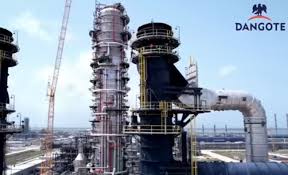

The Dangote Group has recorded its first oil from upstream assets, marking a significant step toward securing domestic crude supply for its 650,000-barrel-per-day refinery near Lagos and deepening the company’s vertical integration in Nigeria’s energy sector. Devakumar Edwin, Vice President of Dangote’s oil and gas division, announced the development in an interview with S&P Global’s Platts on April 17, stating that initial testing from the firm’s Niger Delta licences is underway. “We have opened a well and begun standard testing, which should be completed in the next three to four weeks,” Edwin said, adding that large-scale pumping and fresh drilling campaigns would follow shortly after.
The company is currently producing about 4,500 barrels per day from the Kalaekule field on Oil Mining Lease 72, following a delayed start-up in December 2025, according to Olajumoke Ajayi, chief executive of West African Exploration and Production, Dangote’s upstream joint venture. Production is projected to rise to 15,000 barrels per day within weeks. Dangote holds an 85 per cent stake in WAEP, which has a 45 per cent working interest in OML 71 and 72, with the Nigerian National Petroleum Company Limited holding the remaining stake and First E&P operating the assets.
From an economic perspective, the upstream push could provide a more reliable crude supply for the Dangote refinery, which recently reached its full nameplate capacity. David Bird, CEO of Dangote’s refining business, said the company is also investing in shipping to reduce logistics costs and improve supply stability. Combined with in-house crude production, this could create a “fully integrated” system spanning extraction, transportation, and refining. However, he noted that crude supply decisions would remain commercially driven. “The refinery will take the crude if it makes sense,” Bird said, adding that joint venture partners would seek maximum value for output.
Despite the upstream gains, Dangote’s oilfields will supply only a fraction of the refinery’s needs. Forecasts indicate production from OML 71 and 72 could peak at about 43,000 barrels of oil equivalent per day by 2036, a small fraction of the refinery’s capacity. The refinery currently relies heavily on external crude, with Nigerian grades accounting for about 65 per cent of its imports in early 2025, supplemented by supplies from the United States and Angola. The upstream expansion nonetheless represents a strategic hedge against import dependency, reducing foreign exchange requirements and strengthening Nigeria’s energy self-sufficiency.