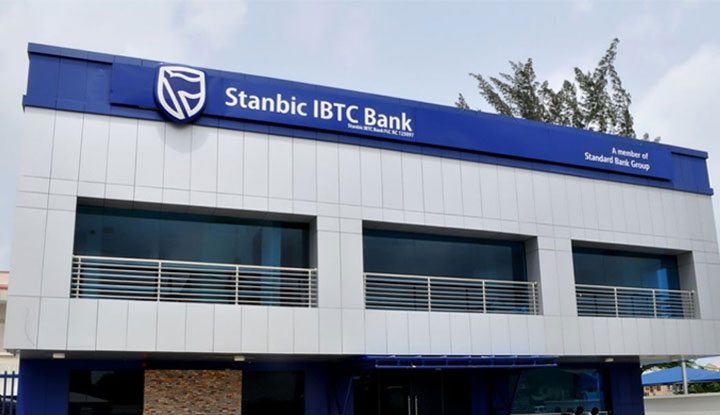

Stanbic IBTC Holdings has approved a total of ₦804.5 million as remuneration for its board of directors for the 2026 financial year, reinforcing ongoing investor attention on governance costs and executive pay structures within Nigeria’s banking sector.
The approval, which was ratified at the group’s latest corporate governance meeting, reflects both fixed and variable compensation components for board members, including fees, sitting allowances, and committee-related payments. While the figure represents a routine disclosure in line with regulatory requirements, it arrives at a time when listed financial institutions are facing heightened scrutiny over cost efficiency, profitability, and alignment between executive incentives and shareholder returns.
In Nigeria’s banking industry, directors’ remuneration has become a sensitive indicator of governance discipline. Investors increasingly view board pay not merely as administrative expenditure but as a signal of how effectively institutions balance talent retention with capital efficiency. For Stanbic IBTC, a subsidiary of South Africa’s Standard Bank Group, the 2026 allocation underscores its continued adherence to group-wide compensation frameworks while adapting to local regulatory expectations set by the Central Bank of Nigeria and the Securities and Exchange Commission.
Analysts note that while the ₦804.5 million package is modest relative to the bank’s scale of operations, its significance lies in transparency and timing. Nigerian banks are currently navigating a complex operating environment shaped by elevated interest rates, inflationary pressures, and currency volatility. These macroeconomic conditions have increased the cost of doing business, prompting boards to reassess expenditure structures, including governance overheads.
Shareholder reaction is expected to be measured but watchful. Institutional investors typically evaluate remuneration proposals against return on equity, dividend performance, and earnings growth trajectory. Stanbic IBTC has historically maintained a reputation for strong corporate governance standards, which may temper criticism even as broader public debate around executive compensation in Nigeria’s financial sector continues to intensify.
Looking ahead, the remuneration framework may also influence how the bank structures incentives linked to long-term performance metrics, particularly as regulatory expectations shift toward greater alignment between pay and sustainable value creation.
In a sector where credibility and risk management are closely tied to investor confidence, the disclosure of board remuneration remains more than a procedural requirement—it is a barometer of governance discipline and strategic intent.