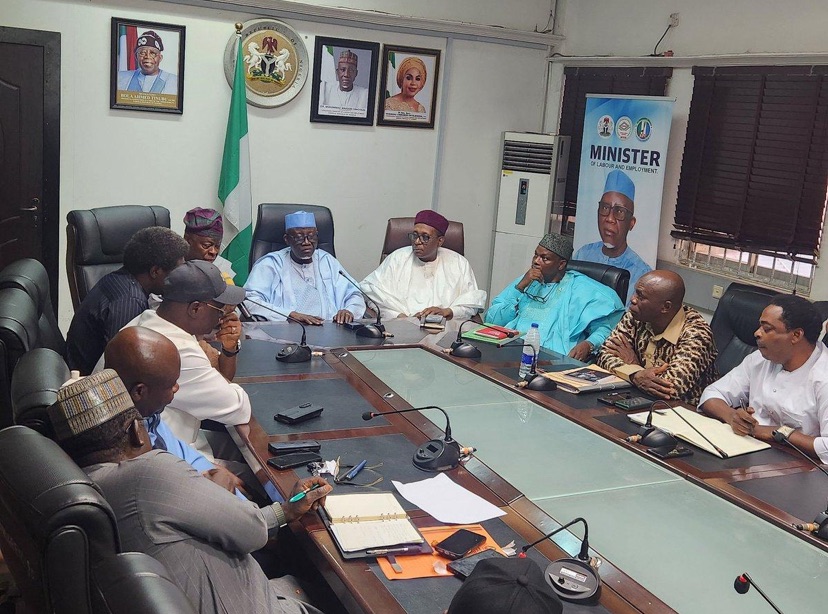

Nigeria’s ongoing debate over a new national minimum wage has sparked mixed reactions from economic experts, labour advocates, and civil society groups, with many arguing that addressing inflation and other economic challenges should take priority over increasing salaries.
The discussion follows the demand by the Nigeria Labour Congress (NLC) for a new minimum wage of ₦1 million, while the Nigeria Governors’ Forum (NGF) has proposed ₦100,000. However, several stakeholders believe that raising wages without fixing the root causes of economic hardship may only worsen the situation for workers and the wider population.
According to them, workers deserve improved welfare and better living conditions, but salary increases alone cannot solve the country’s economic problems. They warned that previous wage adjustments have often been followed by increases in the prices of goods and services, leaving workers with little or no real improvement in their purchasing power.
The stakeholders stressed that government efforts should focus on reducing inflation, stabilising the foreign exchange market, improving electricity supply, strengthening security, and supporting local manufacturing and small businesses. They argued that these measures would have a more lasting impact on the standard of living of Nigerians.
They further noted that when wages increase significantly, landlords often raise rents, transport operators increase fares, and businesses adjust prices upward to cover higher operating costs. As a result, workers quickly lose the benefits of any salary increase.
Many also called for stronger government regulations to prevent unnecessary price hikes and protect consumers from exploitative business practices.
Speaking on the issue, economist and Chief Executive Officer of the Centre for the Promotion of Private Enterprise, Muda Yusuf, said conversations about workers’ welfare in Nigeria have become too focused on wages alone.
He explained that while salary reviews are important, they are not enough to improve workers’ living conditions in an economy struggling with persistent inflation, structural challenges, and weak public services. According to him, wage increases are often quickly wiped out by rising prices.
Yusuf maintained that broader economic reforms aimed at boosting productivity, reducing inflation, and creating a more business-friendly environment would provide more sustainable benefits for workers.
Human rights activist Victor Oriola described the ₦1 million minimum wage proposal as unrealistic, although he acknowledged that the current ₦70,000 minimum wage has lost much of its value due to inflation.
While noting that ₦100,000 may still be inadequate considering current economic realities, Oriola warned that excessive wage increases without corresponding growth in productivity could create further economic instability.
He advised governments to invest more in affordable public transportation through Compressed Natural Gas (CNG) buses and strengthen the agricultural sector to reduce food prices. He also highlighted the need to tackle insecurity, especially attacks on farming communities, which have contributed to food shortages and rising prices.
Another activist, Fred Egoma, cautioned that another wage increase could trigger fresh inflation, making life even more difficult for ordinary citizens.
Similarly, the General Secretary of the Federation of Informal Workers of Nigeria, Gbenga Komolafe, said workers need more than higher salaries. He called for stronger social protection programmes and improved security across the country.
Komolafe argued that poverty and economic hardship make many people vulnerable to criminal activities. He urged the government to combine security operations with policies that address unemployment and poor living conditions.
Overall, stakeholders agreed that while wage increases may provide temporary relief, Nigeria’s long-term solution lies in controlling inflation, improving security, ensuring stable electricity, supporting businesses, and strengthening the economy. They urged policymakers, labour unions, and government officials to focus on these critical issues rather than relying solely on wage negotiations to improve the lives of Nigerian workers.