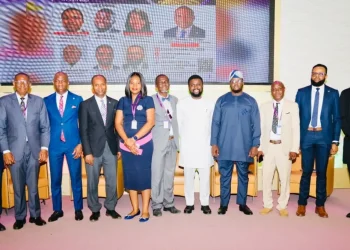
Vice-President Kashim Shettima has charged the National Council on Skills (NCS) to ensure that “Made-in-Nigeria” products and services become synonymous with world-class standards. Presiding over the 8th NCS meeting at the Presidential Villa in Abuja on Friday, March 27, 2026, Shettima emphasized that the nation’s industrial revolution must be powered by the “restless and inventive spirit” found in Nigeria’s schools, streets, and workshops.
The structural and economic consequence of this mandate ties directly into Nigeria’s preparation for the WorldSkills Shanghai 2026 competition. Shettima noted that the inauguration of the National Working Committee for WorldSkills Nigeria is more than a sporting preparation; it is the construction of a “bridge to global relevance” for diverse talents—from AI developers in Lagos’ Silicon Lagoon to precision machinists in Nnewi and climate-smart agriculturalists in Benue. He identified the National Board for Technical Education (NBTE) and the Industrial Training Fund (ITF) as the dual engines required to drive the human capital objectives of President Bola Tinubu’s Renewed Hope Agenda.
Analytically, the impact on “Human Capital as Currency” remains the central theme of the administration’s labor policy. The Vice-President stressed that collaboration between government agencies is the only way to fulfill the state’s covenant with the people. “We owe them a future where their skills are their currency,” he stated, reminding the council that their primary duty is to generate jobs and restore hope through tangible skill acquisition and professional preparation.
The impact on “Private Sector Synergy and Technical Training” was further highlighted by a significant proposal from Dangote Industries. The council reviewed a plan by the conglomerate to conduct a one-month “train-the-trainer” program for 100 candidates across five high-demand technical areas, including industrial mechanics, electronics, instrumentation, welding, and heavy-duty equipment operations. This partnership reflects a growing trend of “twinning” private sector expertise with public sector policy to bridge critical gaps in Nigeria’s engineering sectors.
Furthermore, the NCS commended the Dangote initiative and requested regular progress updates to ensure the program aligns with national industrial needs. Shettima concluded by reminding the council members that the future belongs to those who prepare for it today, urging them to leave the chamber with a renewed sense of service to the Nigerian workforce.
The long-term outlook for Nigeria’s industrial standing depends on whether the NCS can successfully institutionalize these world-class standards before the 2026 global showcase. For the Nigerian worker, the Vice-President’s vision suggests a shift toward a merit-based economy where localized expertise is refined for international competition and domestic industrial growth.