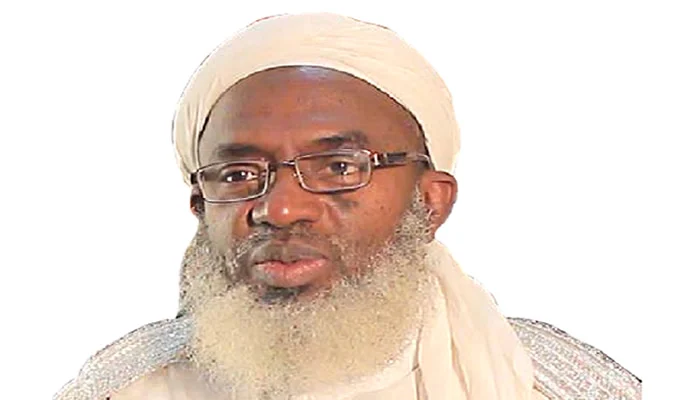

Kaduna-based Islamic cleric Sheikh Ahmad Gumi has said he was told by an unnamed source that his name was included on a list of people marked for elimination by the United States in an airstrike, claiming he was wrongly identified as a member of Boko Haram. His remarks were made in a video message that has since gone viral on social media.
In the video, Gumi said he received an early-morning phone call from someone in Abuja who told him there was a national security meeting and that he had been mentioned among those reportedly slated for targeting during a US military operation. He said the caller did not identify himself and that he was shocked by the information.
“I received a call from a top official in Abuja informing me that I am among those marked by the US for elimination through an American airstrike, as part of Boko Haram,” Gumi said in the recording. He urged other northern leaders and clerics to speak out against what he described as “lies” and “false narratives”.
The allegation comes after the United States carried out airstrikes on 25 December 2025 targeting fighters from the Islamic State West Africa Province (ISWAP) in parts of Sokoto State. The military action followed comments by former US President Donald Trump, who had threatened that the US would intervene “guns-a-blazing to wipe out the terrorists killing Christians”.
Gumi strongly criticised foreign military involvement in Nigeria. He argued that such interventions do not solve insecurity but make it worse. “They claim to have come here to fight terrorists, but they are the actual terrorists,” he said, repeating a theme he has used in other public statements.
The cleric also questioned the broader global narrative about terrorism and who is responsible for the rise of insurgent groups like Boko Haram. He suggested that powerful foreign nations have played a role in creating or sustaining them, inviting listeners to reconsider who the real threat to peace and security might be.
In addition to his remarks about foreign forces, Gumi criticised political and religious leaders in northern Nigeria for what he described as their silence and lack of action in the face of repeated attacks by Boko Haram and ISWAP. He expressed frustration that local leaders were not doing more to protect communities or to challenge narratives that he views as harmful.
Gumi also took aim at some religious scholars, accusing them of failing to challenge what he called “false claims” made by extremists and of showing preferential support to certain groups. He urged leaders to provide support equitably across the nation rather than aligning narrowly with specific communities.
The cleric said Nigerians have grown fearful and reluctant to speak out on these issues, leaving society fragmented and confused about the truth behind insecurity and terrorism. He said the situation, marked by fear and silence, was harming the country’s unity and stability.
It is important to note that beyond Gumi’s claim there has been no official confirmation from the United States or Nigerian authorities that he was on any such list or was targeted in an airstrike. Independent verification of his allegations has not been provided.
Gumi’s statements have sparked debate online, with some Nigerians sharing and discussing the viral video, while others have questioned the accuracy and context of his remarks.
Overall, the episode highlights ongoing tensions around foreign military involvement in Nigeria’s fight against insurgent groups and the sensitive nature of public discourse about security, leadership and national sovereignty.