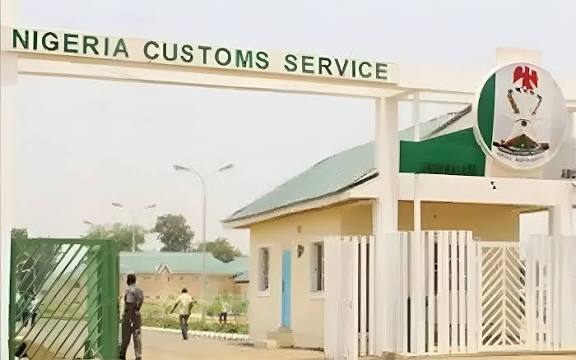

Nigeria’s Senate has approved the Nigeria Customs Service (NCS) 2026 fiscal plan, endorsing a record revenue target of ₦11.074 trillion and an expenditure budget of ₦1.295 trillion as the government seeks to strengthen non-oil revenue generation and improve fiscal sustainability.
The approval, announced on Wednesday, followed the adoption of the report presented by the Senate Committee on Customs. Lawmakers said the ambitious revenue projection reflects confidence in the Customs Service’s improving collection performance and the Federal Government’s broader drive to expand domestic revenue amid persistent fiscal pressures.
Under the approved spending framework, ₦421 billion has been earmarked for personnel costs, ₦307 billion for overhead expenses, while ₦565 billion will finance capital projects aimed at strengthening border infrastructure, modernising customs operations, expanding technology deployment, and enhancing trade facilitation.
The expenditure plan will be financed primarily through the statutory 4% Free-on-Board (FOB) levy on imports. The FOB levy is calculated on the value of imported goods before shipping and insurance costs are added, providing the Customs Service with a dedicated funding source for operational and infrastructure development.
The Senate’s decision comes after the Nigeria Customs Service exceeded its 2025 revenue target, collecting ₦7.2 trillion against a budgeted ₦6.5 trillion. The strong performance has reinforced lawmakers’ confidence that the agency can sustain higher revenue mobilisation through improved compliance, enhanced border surveillance, digital customs processes, and anti-smuggling operations.
The new target also aligns with the Federal Government’s ongoing efforts to reduce dependence on crude oil earnings by strengthening tax administration and customs revenue. As oil price volatility continues to weigh on public finances, customs collections have become an increasingly important source of government income for financing infrastructure, public services, and budget implementation.
Analysts note that achieving the ₦11.074 trillion target will require continued reforms, including wider adoption of automated customs systems, tighter enforcement against revenue leakages, improved cargo clearance procedures, and stronger collaboration with other border management agencies. Sustained growth in import volumes and exchange rate stability will also influence revenue performance during the fiscal year.
Market observers say the approval sends a strong signal of the government’s commitment to expanding internally generated revenue while improving the operational capacity of one of Nigeria’s largest revenue-generating institutions. If successfully implemented, the 2026 fiscal plan could further strengthen public finances and support broader economic reform objectives.